
NBA Top 100 Players
The top 100 NBA players in 2026—examined, evaluated, and ranked.
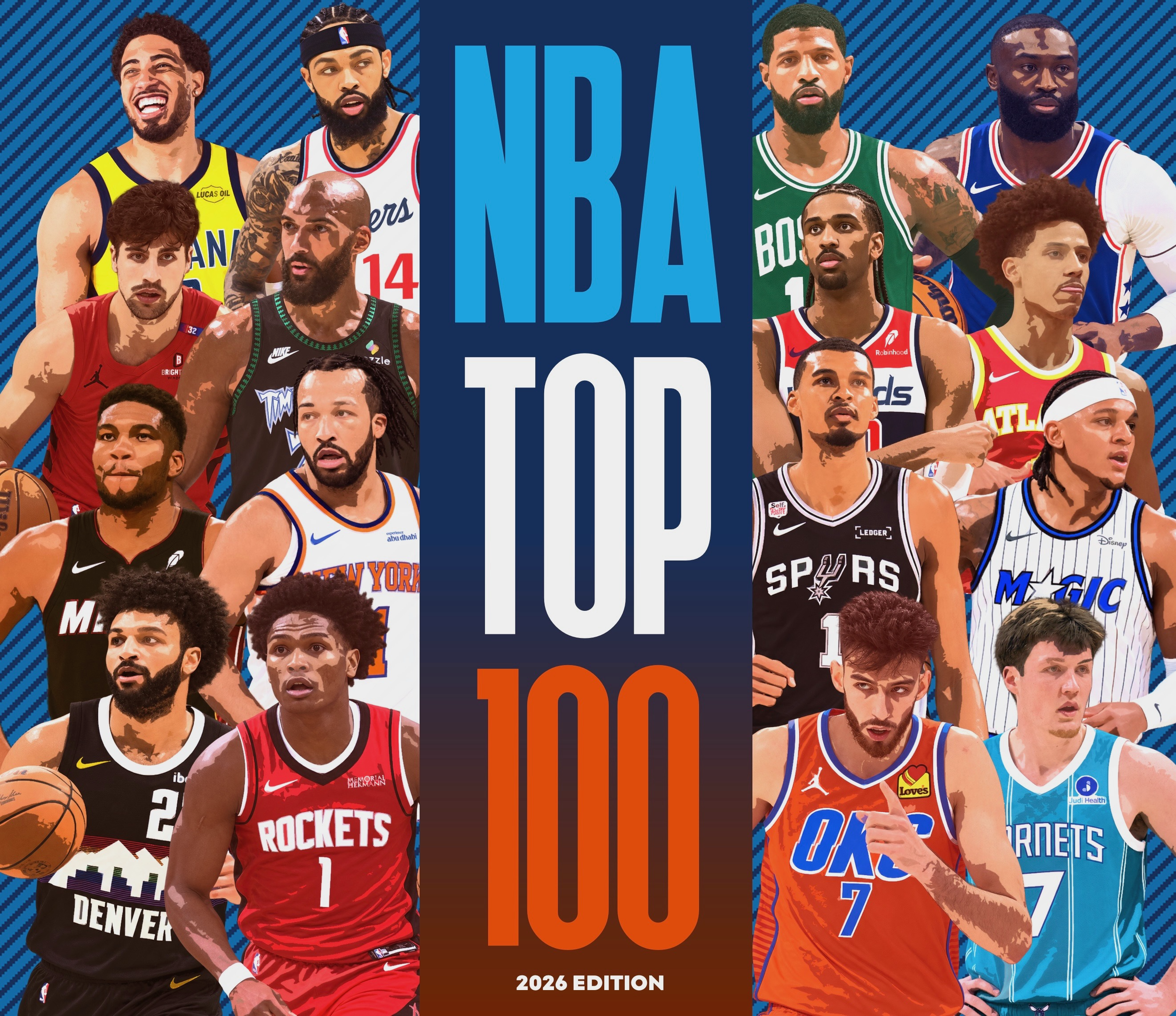
A ranking of the top 100 NBA players following the 2025-26 season. These are not “projections” for where each player will be at the end of the upcoming 2026-27 season, but simply an evaluation of each player—right now—based on their current resume and what we’ve seen from them to this point of their career. All factors are taken into account—individual accolades, stats, advanced metrics, team success, durability, and overall perceived impact on winning. Incoming rookies are excluded for this exercise.
Interested in seeing how everyone stacked up last year? Check out previous years’ rankings:
2025 2024 2023
-
WHY HE’S NOT LOWER
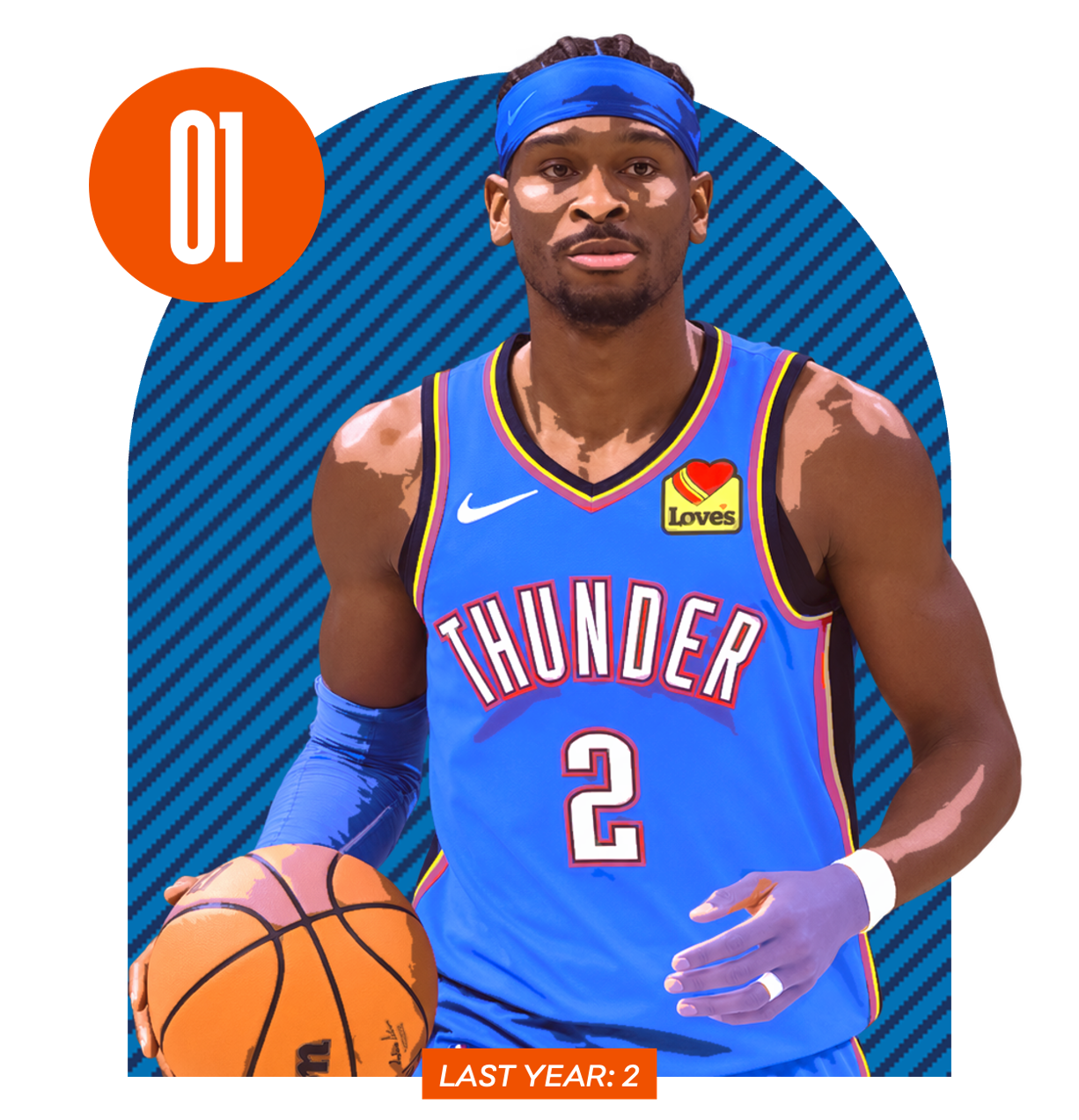
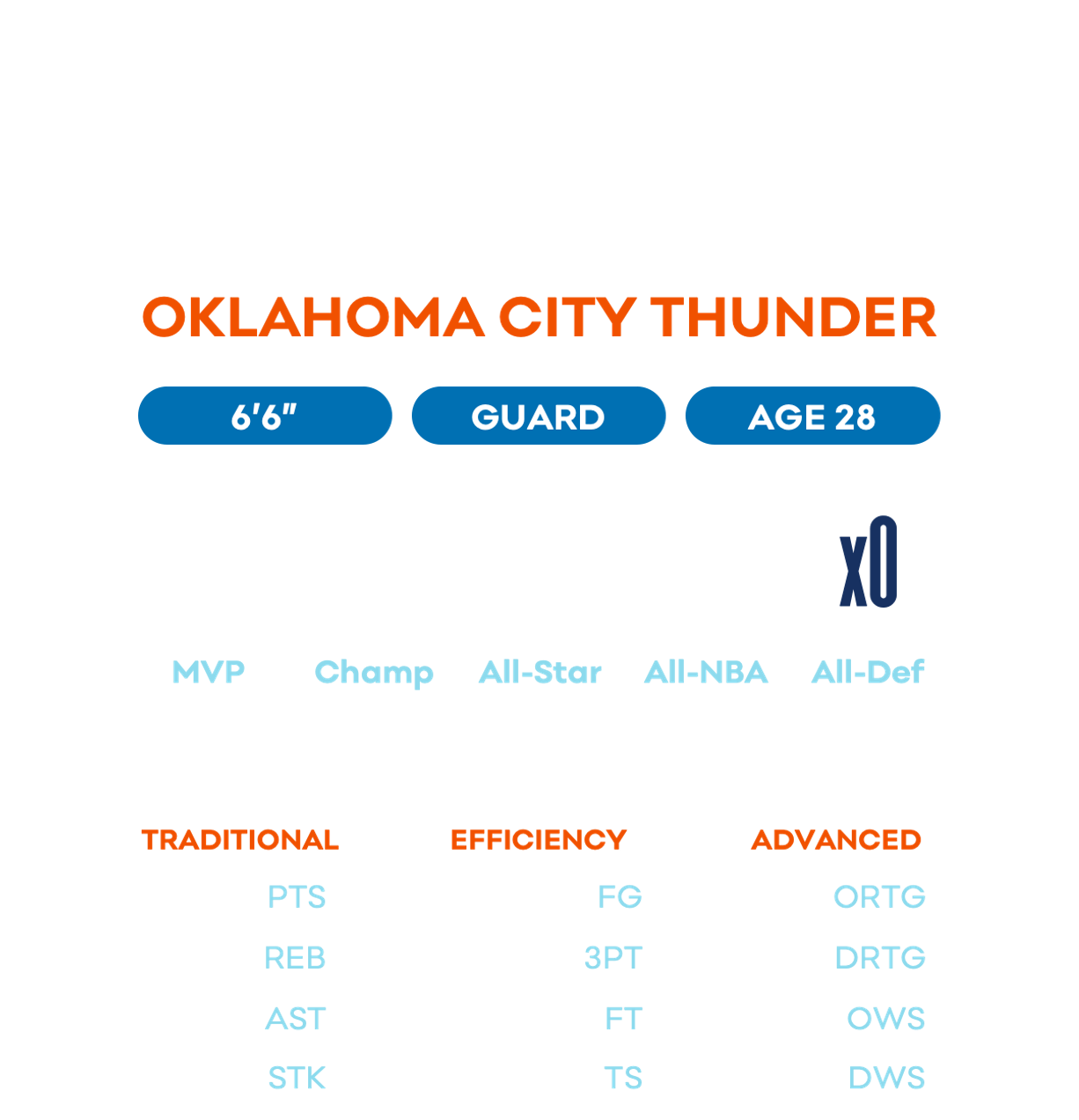
Back-to-back well-deserved MVPs, a Finals MVP, a four-year sample of 31.3 pointer per game on 52.9%—Shai is firmly in the prime of his career putting together one of the best guard peaks in NBA history. He lives in the midrange and dominates when he’s there, is the golden standard of night-to-night consistency, impacts the game on both ends of the court, and lacks a real offensive weakness to his game with his improved 3-point shooting.
WHY HE’S NOT HIGHER
Well, because you can’t get higher than number one.

-
WHY HE’S NOT LOWER
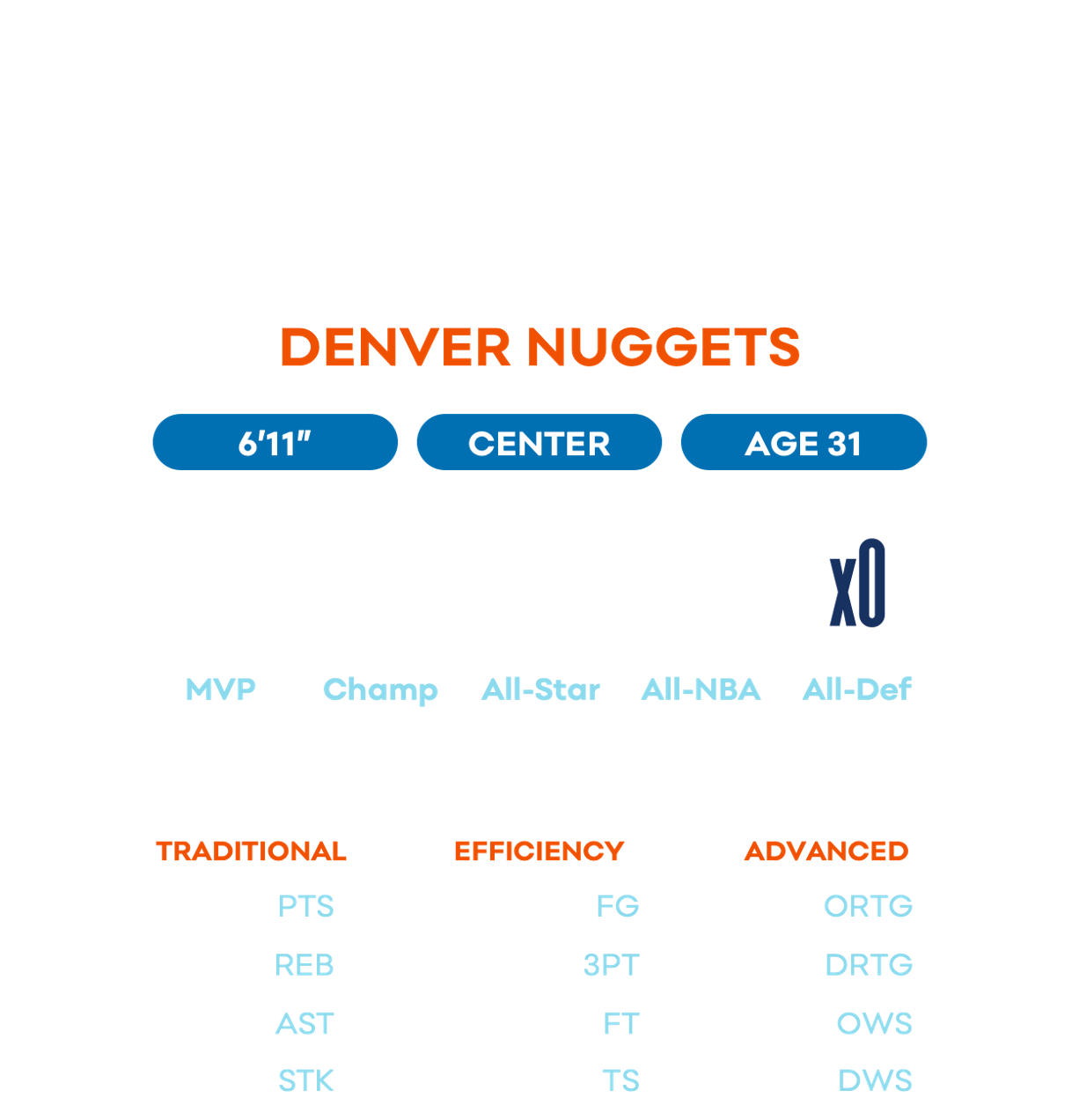
Jokic continues to ascend the all-time ranks as he remains in the midst of one of the greatest individual primes the NBA has seen. He’s a three-time MVP that became the first player in NBA history to lead the league in both assists and rebounds, alongside a not-too-shabby 27.7 points per game on 67.0% true shooting. He might be the sport’s all-time best individual offensive hub and continues to break the brains of basketball nerds with his cheat-code-level advanced stats.
WHY HE’S NOT HIGHER
Since the 2023 title, Jokic has struggled to elevate his team back to contention—including back-to-back second round exits that were compounded by an ugly first round exit this past season. In that series, Jokic showed real signs of mortality with sloppy turnovers, a precipitous drop in efficiency, and amplified defensive deficiencies.
-
WHY HE’S NOT LOWER
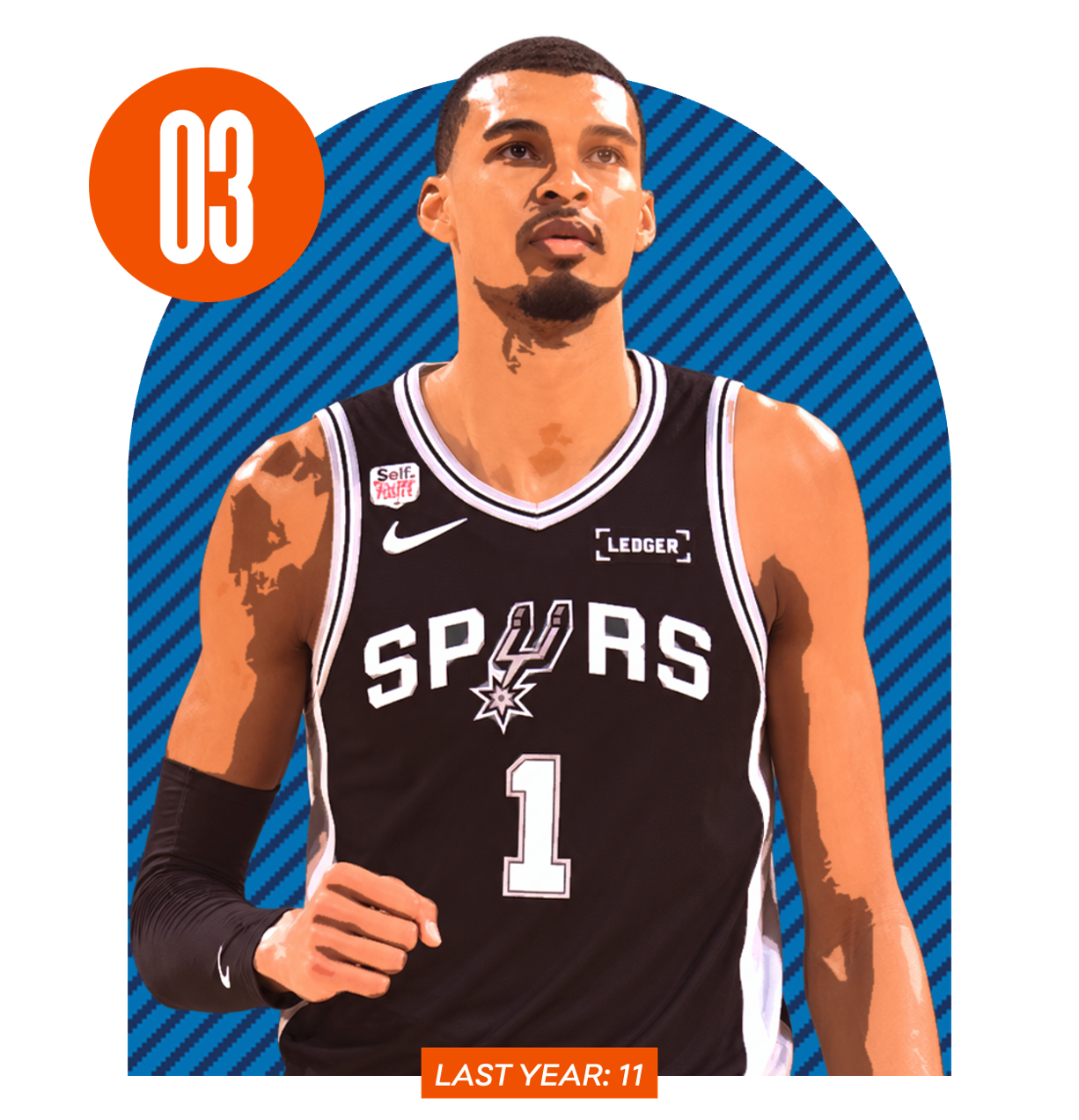
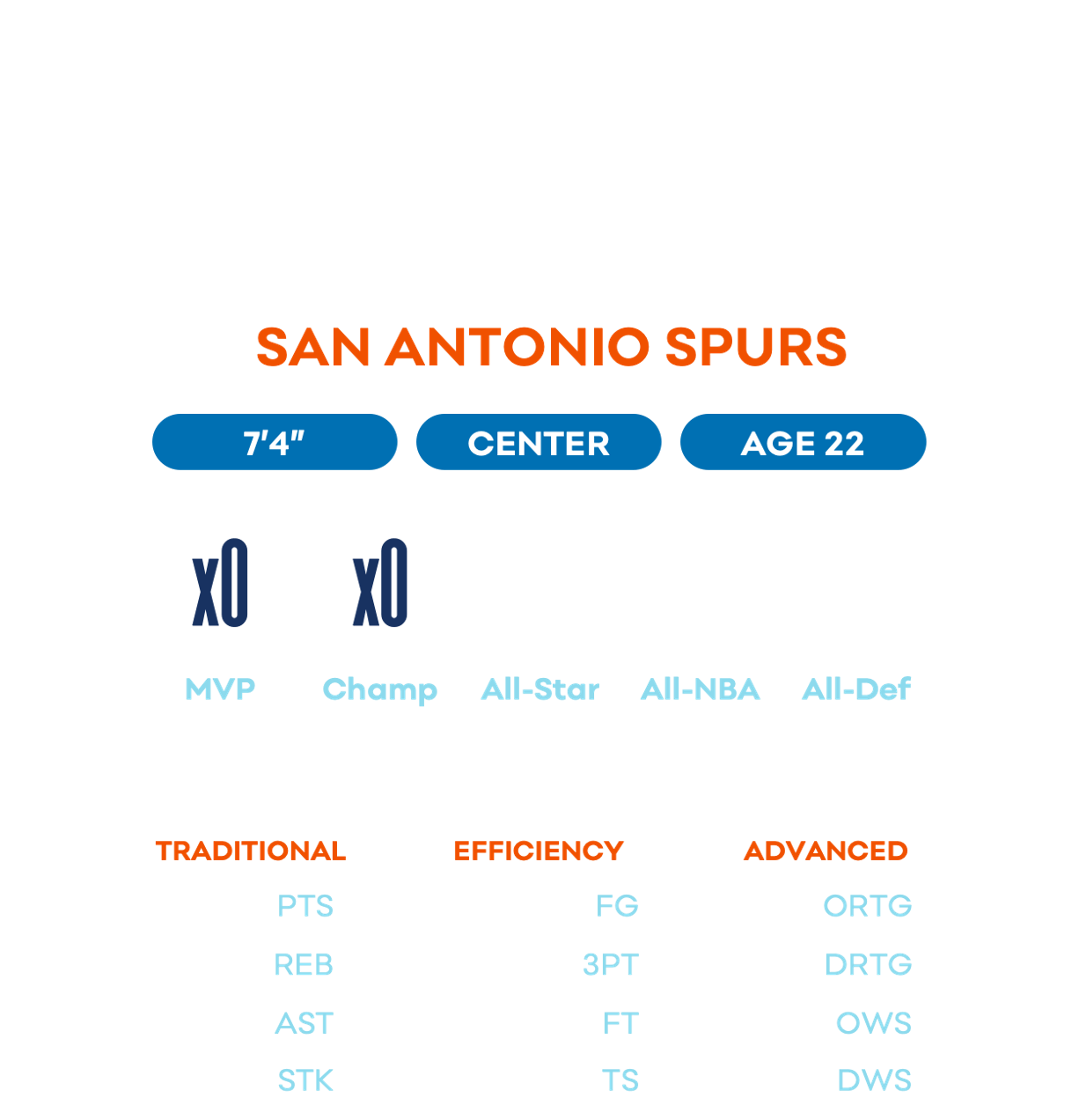
At 7’4”, with an 8-foot wingspan and extremely fluid mobility, his nickname—“Alien”—is well deserved. Even at that size, he handles the ball like a guard and can shoot it off the dribble like a perimeter player. But after two years of mostly theoretical dominance, Wemby put it all together this past season—finishing third in MVP voting, unanimously winning Defensive Player of the Year, earning First Team All-NBA, and leading his team to the Finals at just age 22.
WHY HE’S NOT HIGHER
In the Finals, Wemby’s youth, inexperience, and offensive limitations unfortunately were amplified on the biggest stage. He shot just 42.3% from the field, 27.3% from deep, had as many turnovers as assists, and will be infamously remembered for multiple late-game blunders. Despite being the best defensive player on the planet and offensively dominant in spurts, he still lacks the consistency on offense of that of a Jokic or Shai—but terrifyingly, it may only be a matter of time.
-
WHY HE’S NOT LOWER
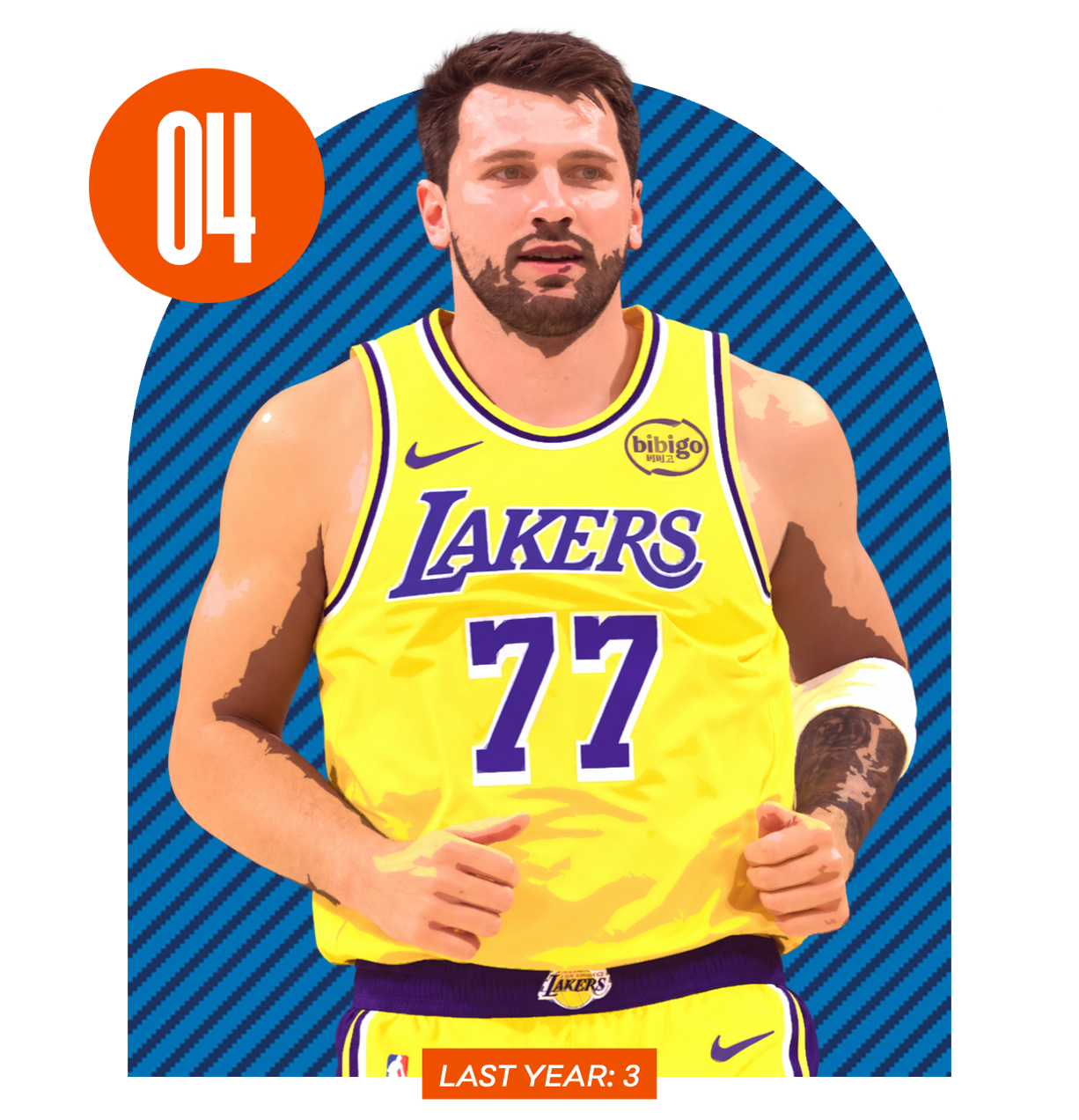
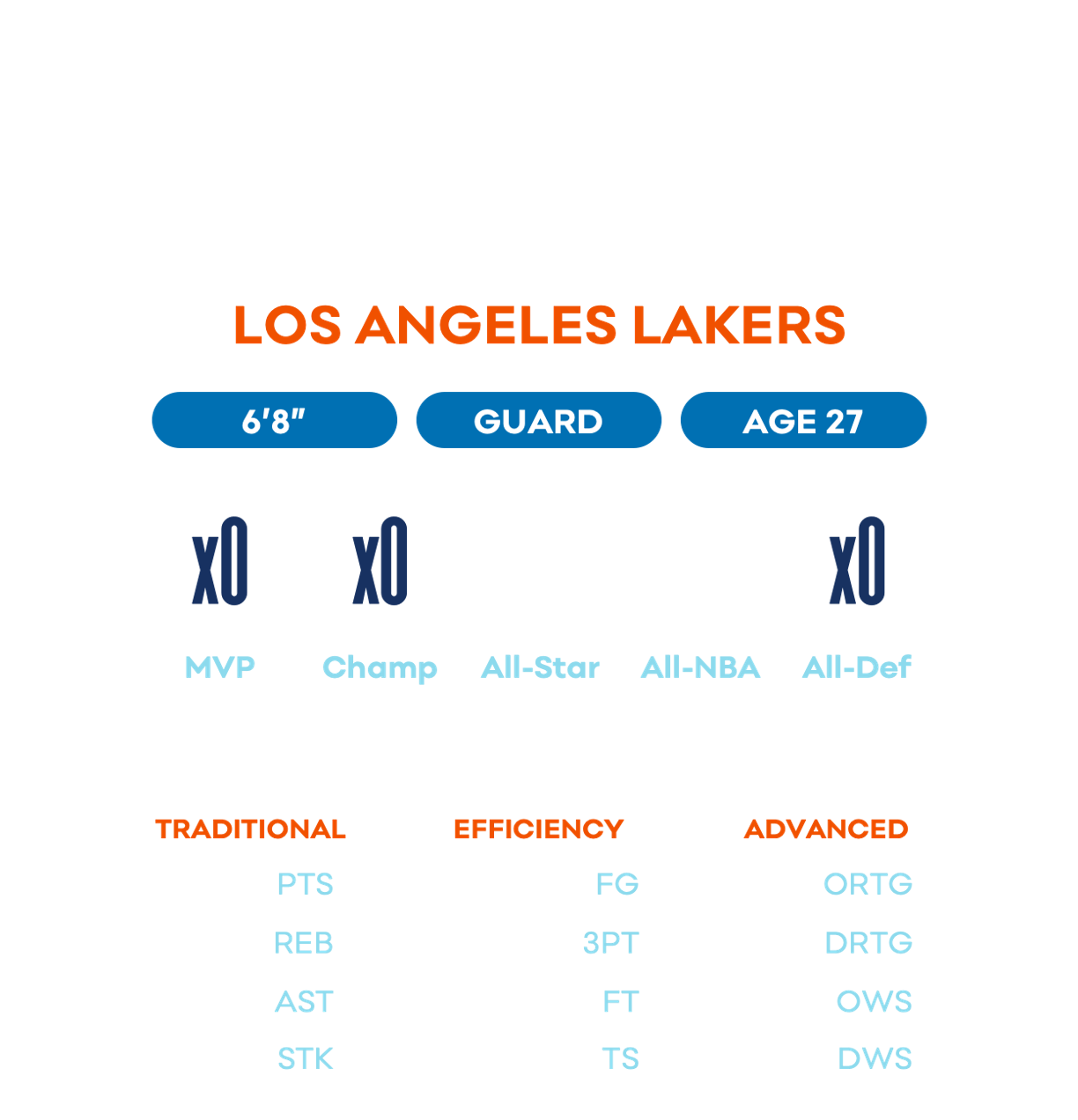
Eight seasons into his career, Luka’s résumé from a statistical and accolade perspective is comparable to just about any all-time great in the history of the league: six First Team All-NBAs, two scoring title, a trip to the Finals, and ridiculous career averages of 29.2 points, 8.5 assists, and 8.2 rebounds. When Luka is on your team, he is the system in itself—arguably the best isolation scorer in the league paired with comparably special passing and playmaking ability.
WHY HE’S NOT HIGHER
Despite his gaudy numbers, Luka is far from a perfect player. His defensive deficiencies have been put under a microscope in some of the biggest moments, he can fall into bad habits with his heliocentric-style, and despite improvements last season, the conditioning issues are well documented and will likely continue to be a topic of discussion.
-
WHY HE’S NOT LOWER
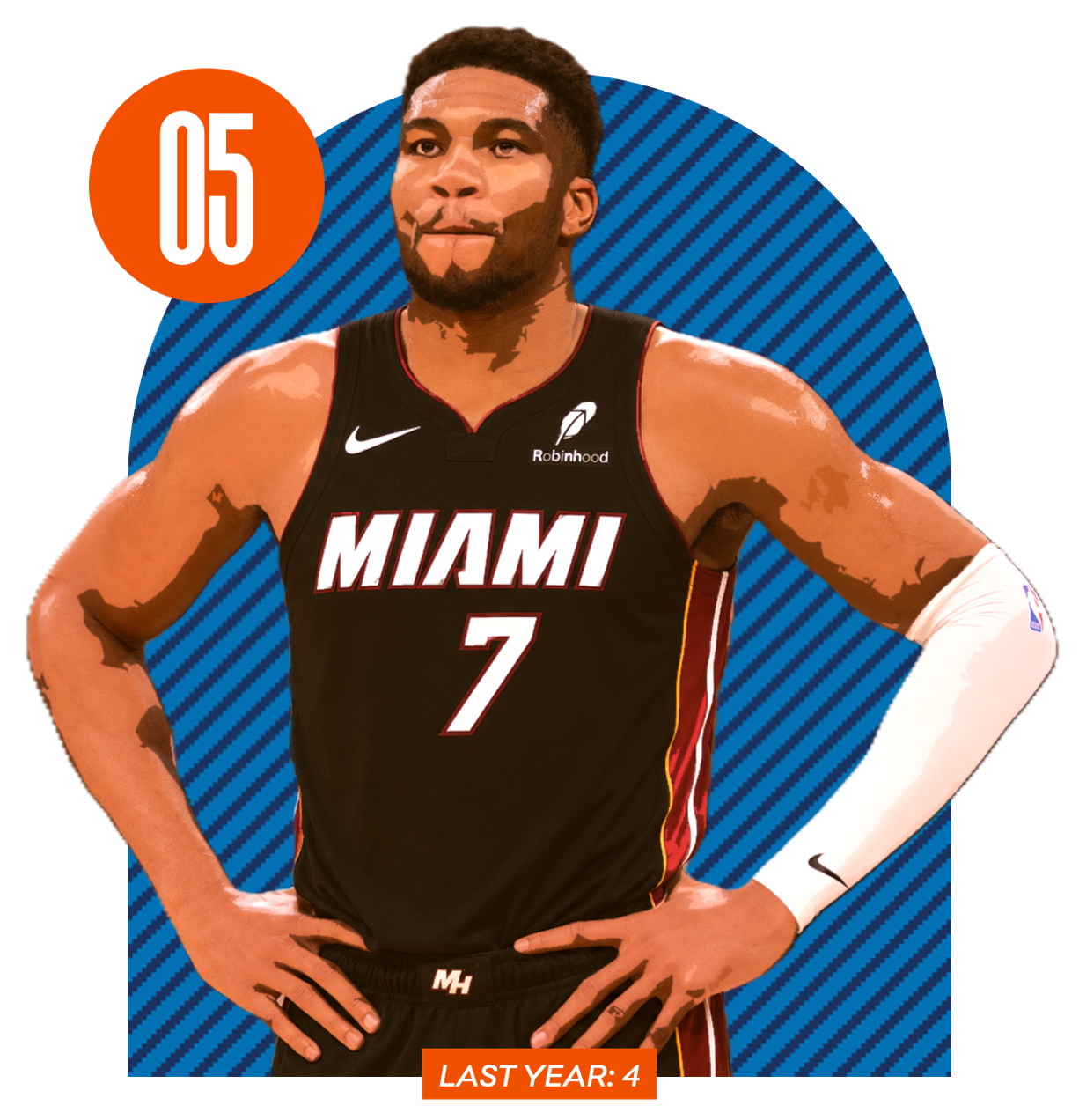
Giannis has now averaged 29.4 points, 11.8 rebounds, and 6.0 assists on 57.8% from the field over a ridiculous eight-year sample, including two MVPs, a DPOY, and the Finals MVP back in 2021—and when he’s healthy, he hasn’t skipped a beat. He plays with a unique level of force, skill, and athleticism that has made him one of the truly elite two-way players. He’s lethal in transition as a ball-handler getting downhill, an unstoppable force in the paint, and has the versatility defensively to guard all five positions.
WHY HE’S NOT HIGHER
Without a doubt, Giannis’ greatest deficiency is his shooting—a career 28.5% shooter from deep and 69.1% from the line—and at 31 years old, it’s unlikely he ever develops a reliable jumper. And even though he’s proven he can win without the jump shot, but it’s been five full years since Giannis’ magic Finals run, and in that span, Giannis-led teams have failed to get out of round two even once and have often found themselves with Giannis’ availability increasingly unreliable.
-
WHY HE’S NOT LOWER
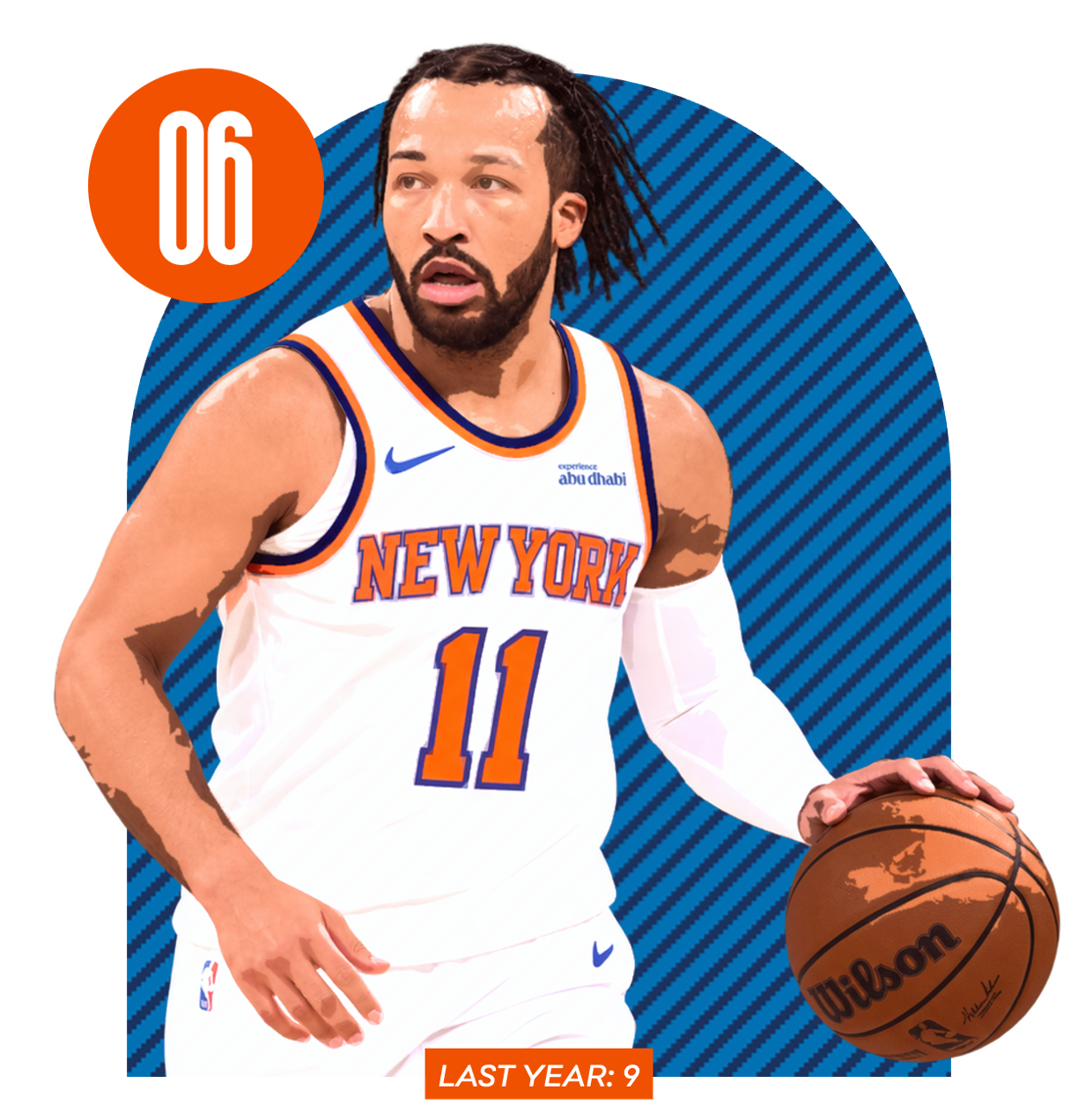
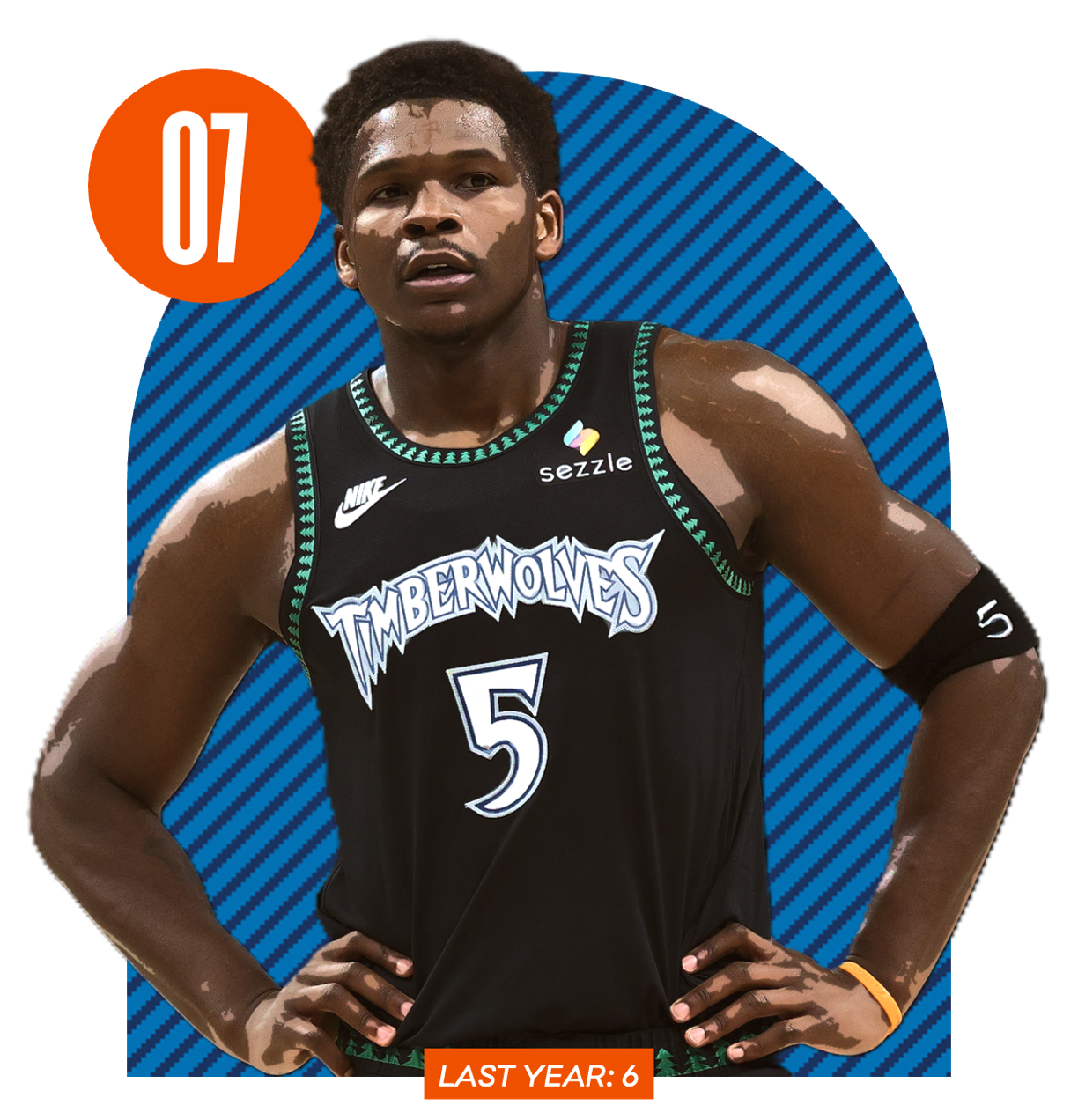
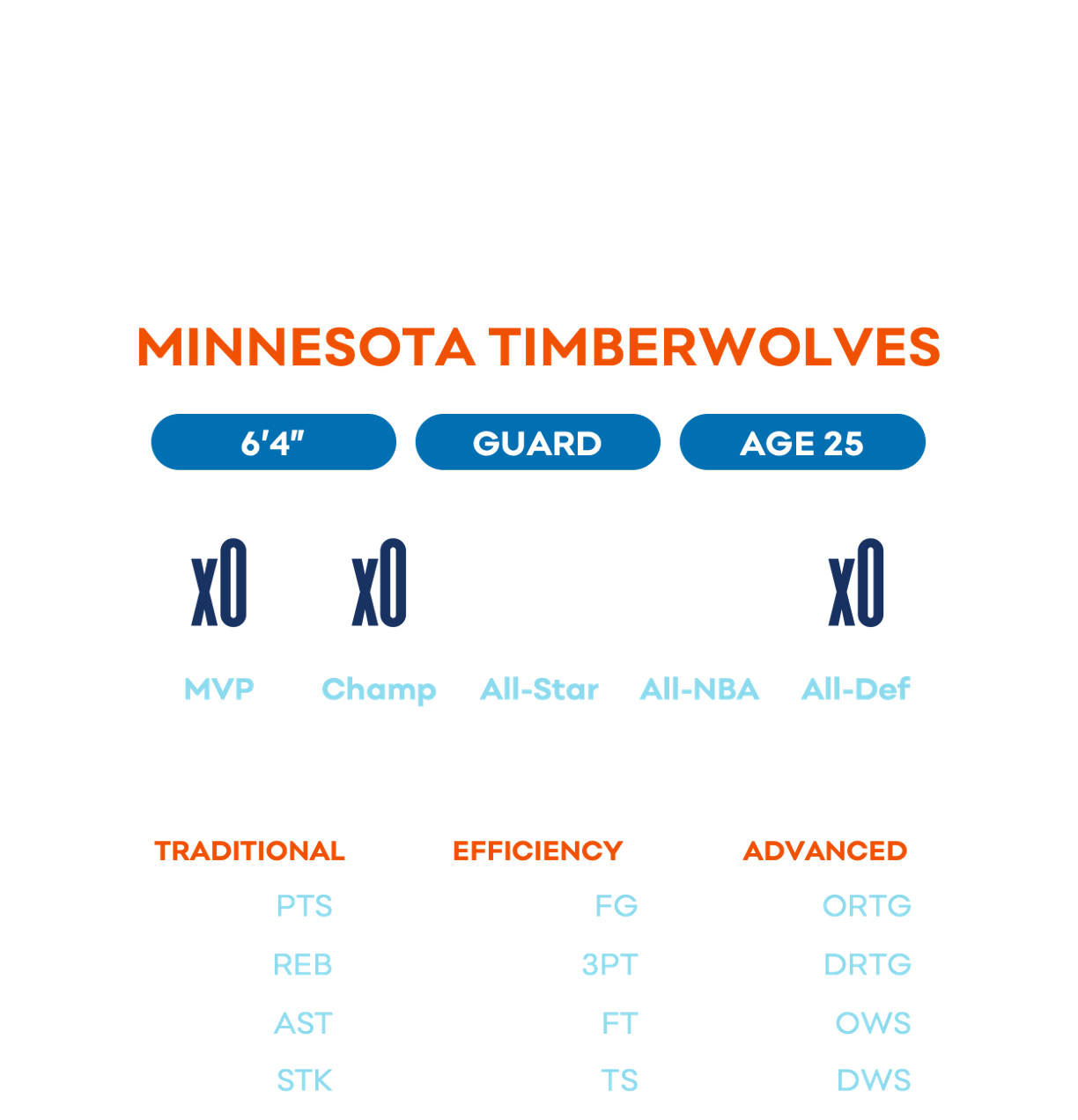
Every time you think Brunson has maxed out what he’s capable of being as a player, he somehow bursts through the proverbial ceiling once again. Brunson has become one of the game’s premier playoff performers, and this past postseason was his masterpiece, culminating in a Finals in which he averaged 32.6 points and dropped 45 in the championship-clinching Game 5 against San Antonio. He has a throwback, old man’s game—dominating with his elite footwork, head fakes, crafty moves, and a deceptively burly build—but most importantly, Brunson proved he CAN be the best player on a championship team.
WHY HE’S NOT HIGHER
Despite the ring, his physical limitations have not magically disappeared. He’s still extremely targetable defensively, as the Knicks were 8.2 points per 100 possessions better on defense with him off the court during their dominant playoff run. Because of that, he needs a very specific team build around him to be able to hide him on that end—but lucky for him, the Knicks have exactly that.
-
WHY HE’S NOT LOWER
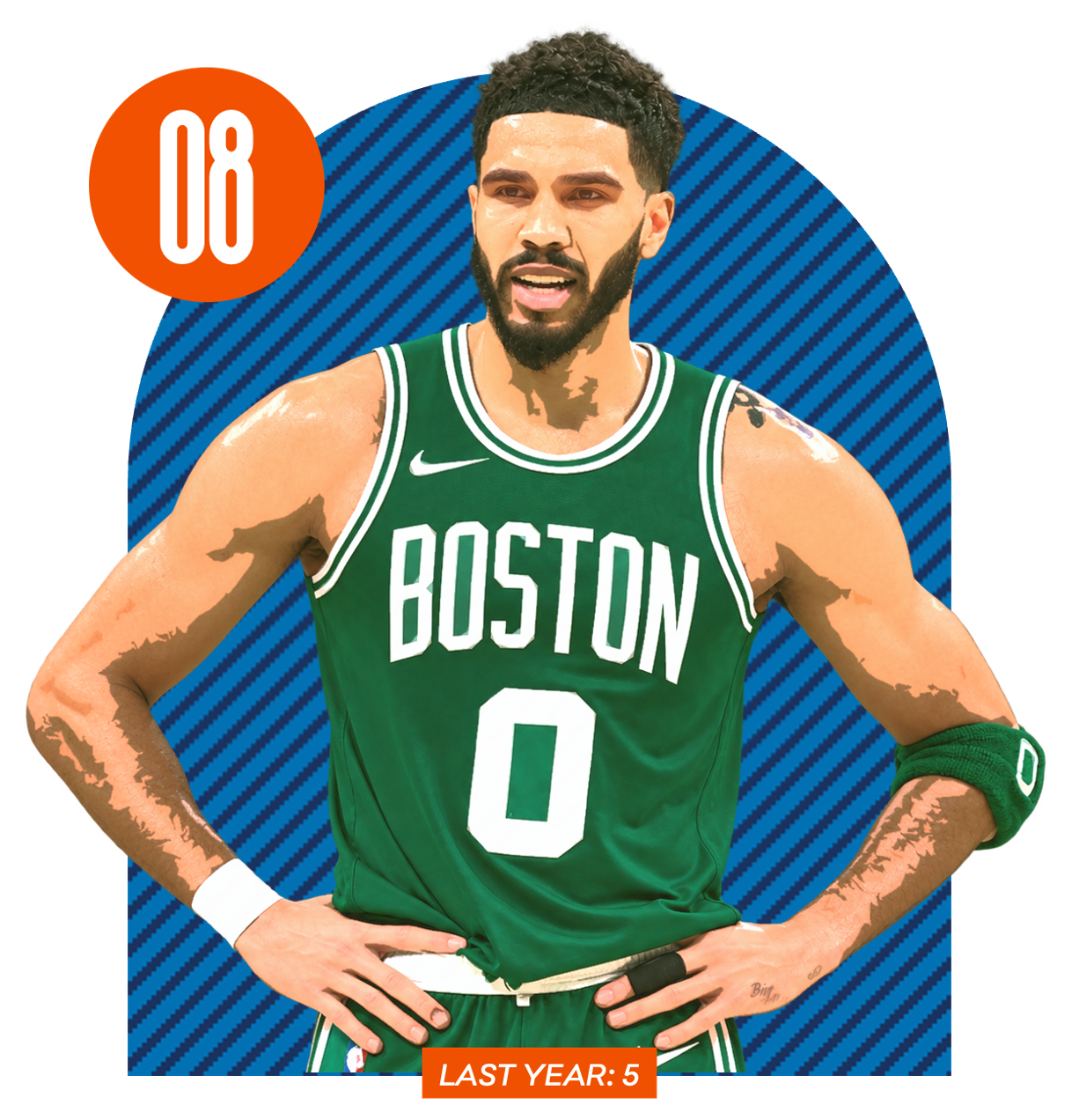
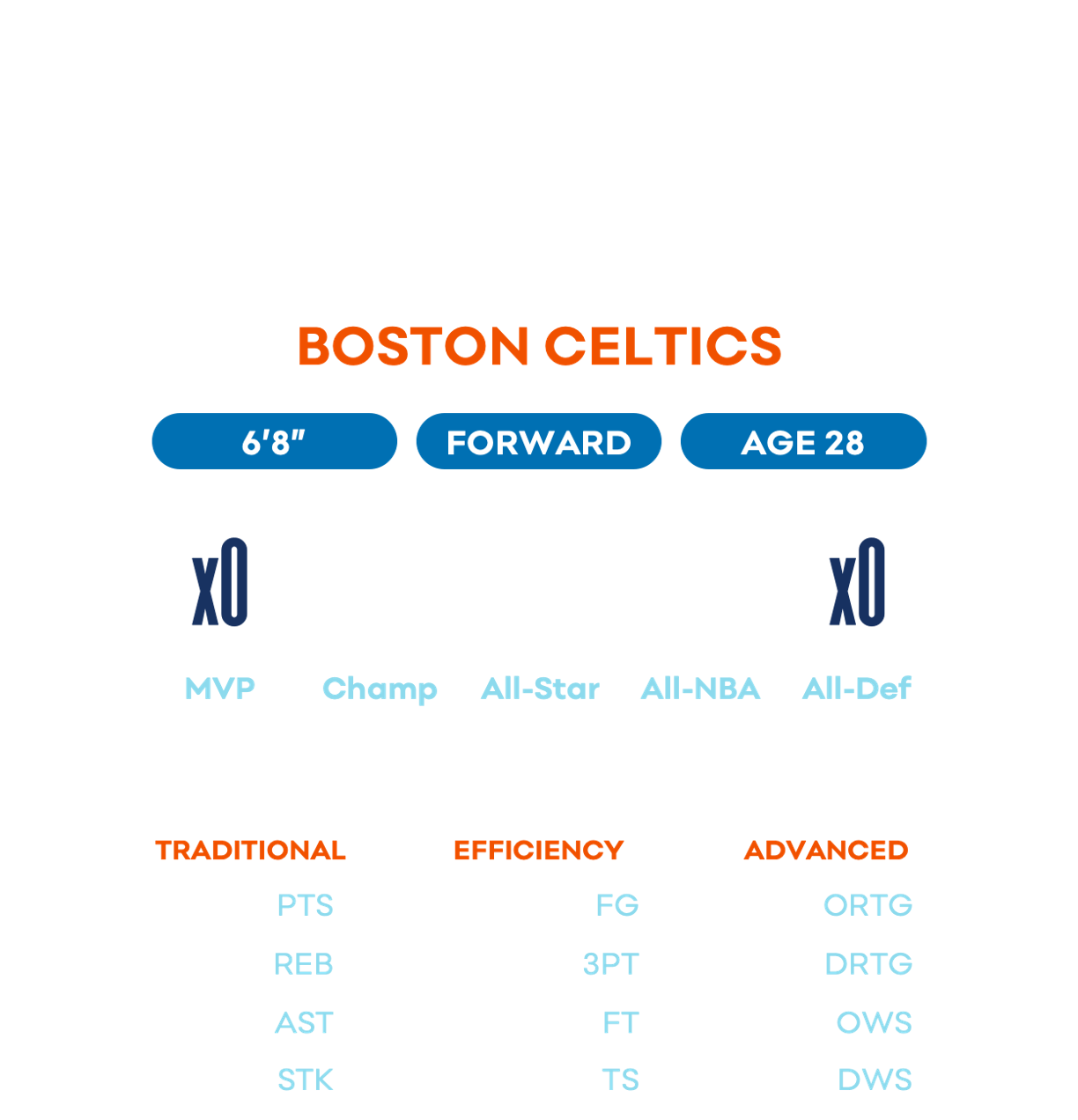
After taking a longtime bottom-feeder franchise to back-to-back conference finals, Ant had his best season as a pro this past year—averaging a career-high 28.8 points on career best efficiency. He is a human highlight reel waiting to happen due to his freakish athleticism, but he’s become much more than just that as he continues to polish his offensive game with improved decision making and development into one of the best volume shooters in basketball. He’s also a proven playoff riser—having knocked off players like Booker, KD, LeBron, Luka, Steph, and Jokic twice in just the past three postseasons.
WHY HE’S NOT HIGHER
But the next step for Edwards remains the same one it was a year ago—his playmaking consistency. He posted his lowest assist total since his rookie season, still struggles at times making the right reads out of pressure, and can become a bit disengaged offensively when forced off-ball. And despite the playoff success, both his conference finals appearances ended quickly and in ugly fashion, as Ant was majorly outclassed by his star counterpart and has yet to be able to get Minnesota over that hump.
-
WHY HE’S NOT LOWER
Tatum’s game isn’t the flashiest and, yes, he’s been the beneficiary of playing with some great supporting casts, but don’t let that take away from what he’s accomplished in his impressive career to this point. Prior to rushing back from his Achilles injury last year, he was coming off a five-year run that included four consecutive First Team All-NBA honors, two trips to the NBA Finals, an NBA championship, and cumulative averages of 27.5 points, 8.2 rebounds, and 4.9 assists, on 59.0% true shooting. He’s a prolific scorer, much improved playmaker, and possesses borderline elite defensive versatility.
WHY HE’S NOT HIGHER
Unfortunately, after his devastating Achilles injury, question marks will remain about what version of Tatum we’ll get moving forward. When he did come back last year, both his volume and shooting efficiency were way down, and so, was it just rust coming off a rushed return? Or will there be lingering affects to Tatum’s game? None of which is to mention that Tatum still had a bit of proving to do before the injury. While he did get his ring, he only shot 42.7% from the field and 28.8% from deep during their 2024 run, including just 38.8% from the field in the Finals.
-
WHY HE’S NOT LOWER
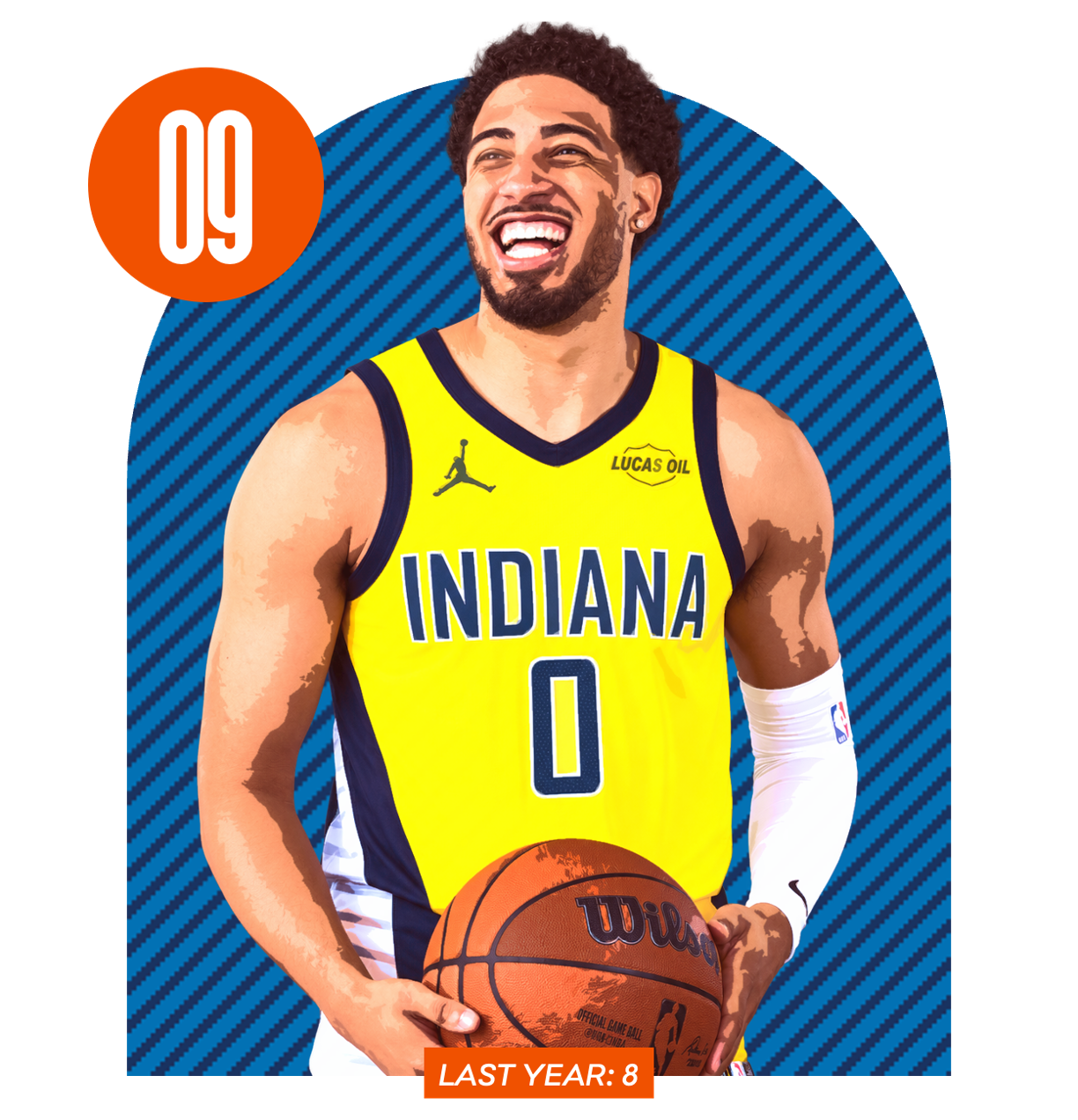
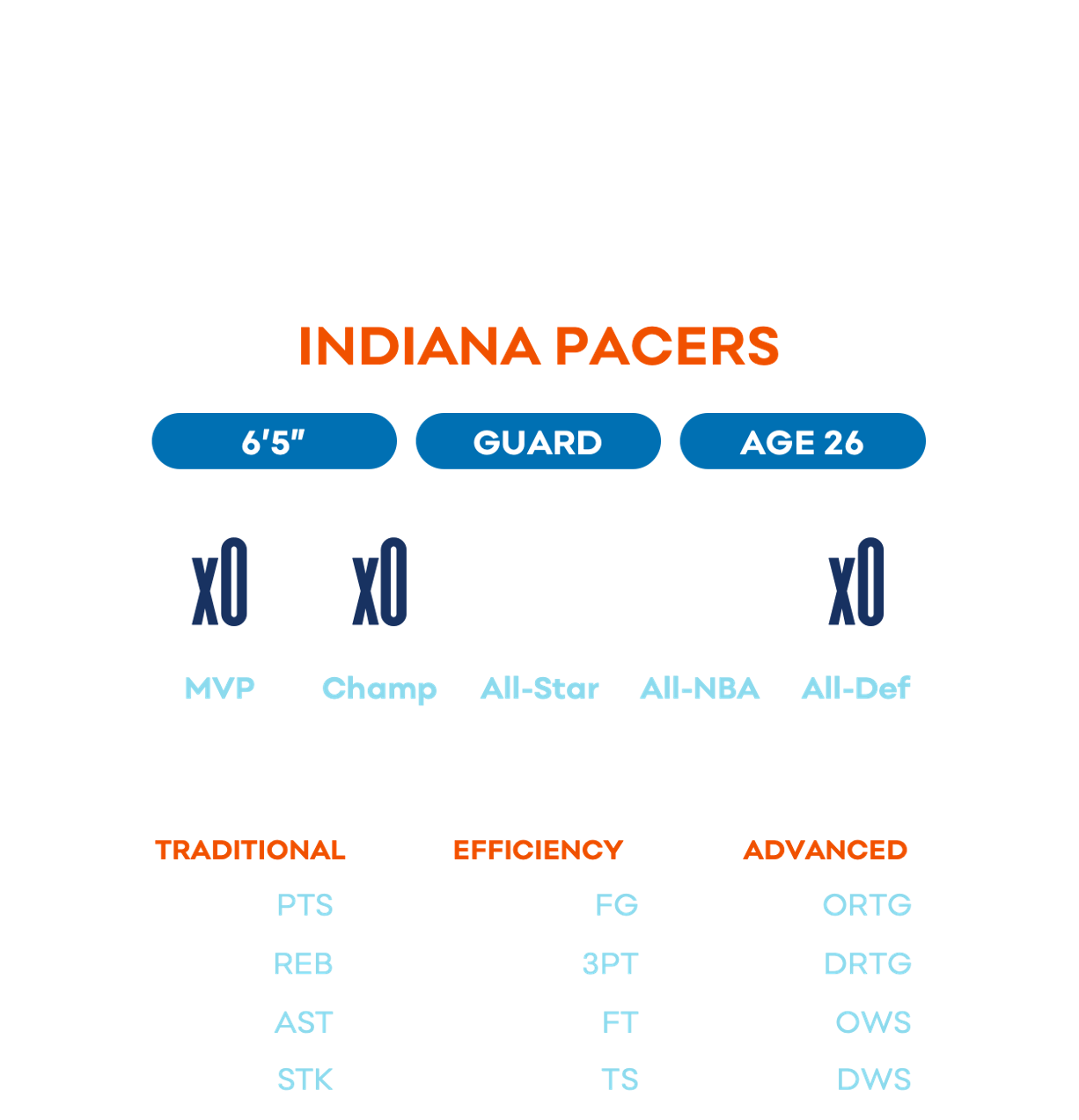
The last time we saw Haliburton, he put on an all-time clutch playoff performance unlike any we’ve seen before. He hit four game-winning shots that capped off four of the most inconceivable comebacks in postseason history, and had he not gotten injured in the Finals, it might’ve resulted in an NBA championship. Haliburton is a truly unique offensive engine and a system in himself, but not in the typical fashion of a modern, high-usage guard. His mastery of pushing the pace and keeping the ball moving is contagious for his teammates, and he has a rare ability to control the game without having to dominate the ball.
WHY HE’S NOT HIGHER
But similarly to Tatum, and maybe even to a higher degree since we didn’t see him last season, question marks will remain about Haliburtons health. Can he be the same guy that lives in transition with an elite first step? Or will he lose even half a step and, as a result, take a small step back? And even if he does return to form, Haliburton will need to maintain the aggressive play that makes the Pacers so difficult to beat if he wants to continue to ascend.
-
WHY HE’S NOT LOWER
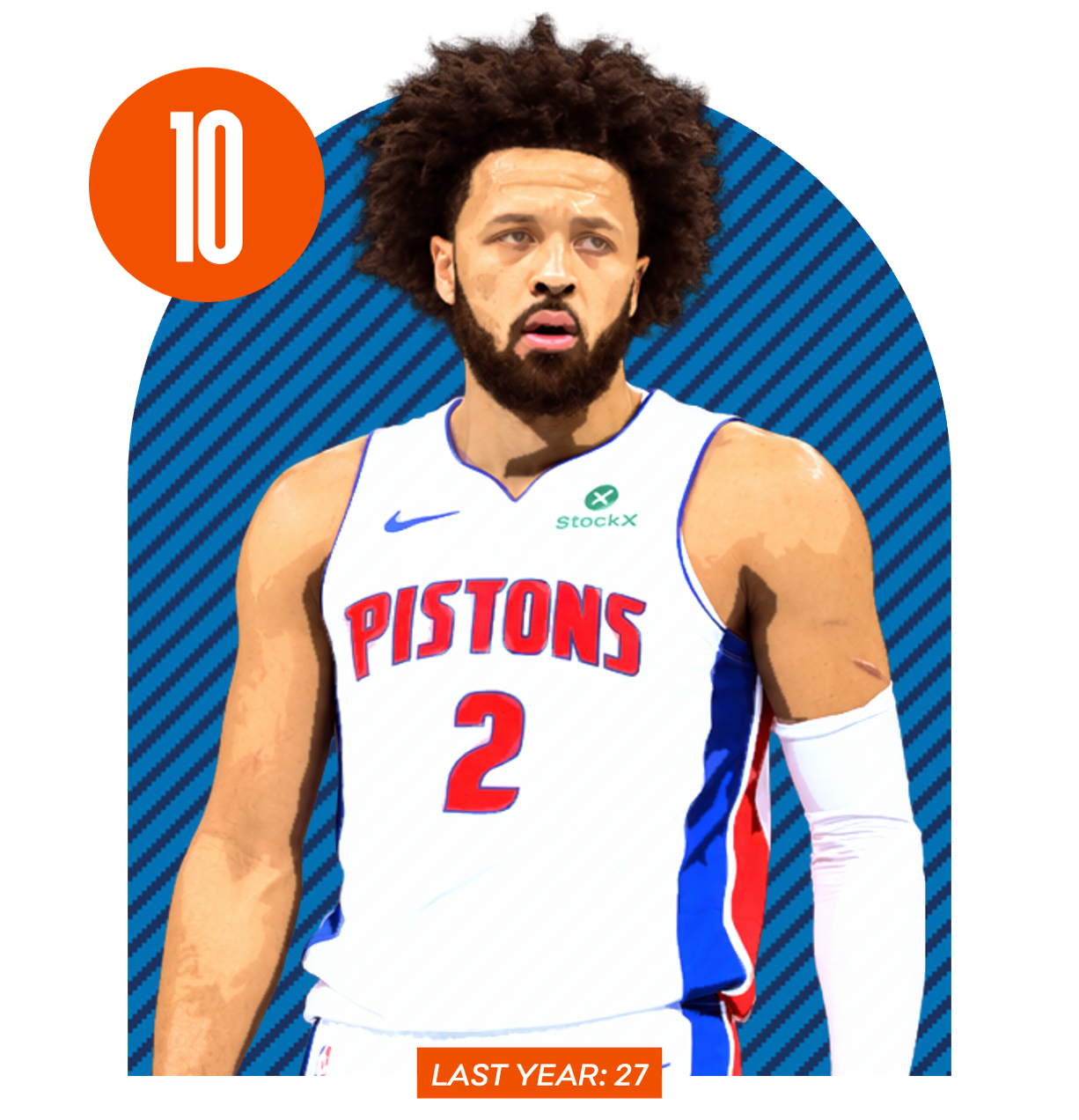
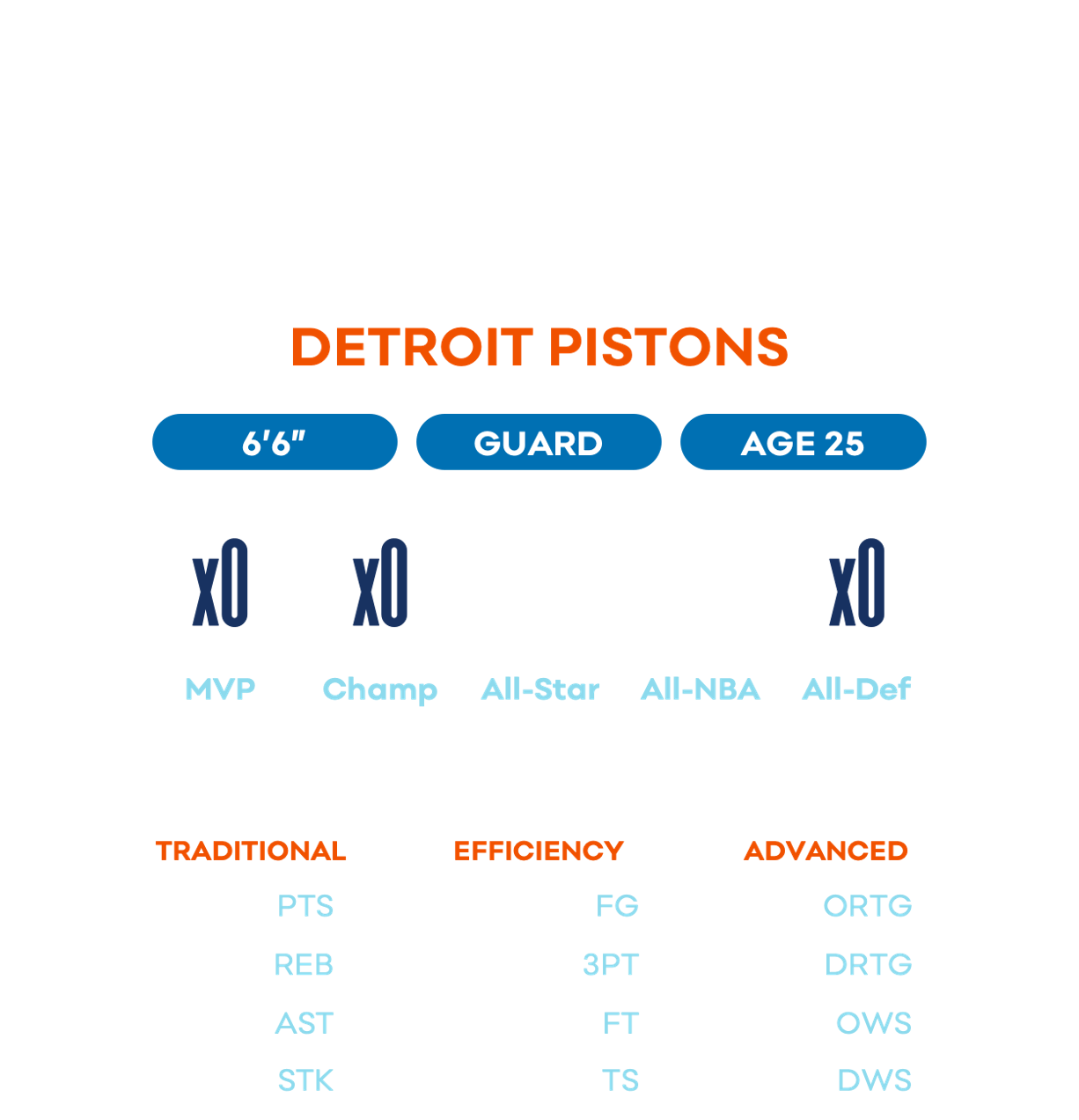
Cade followed up his breakout 2025 by taking yet another leap—earning First Team All-NBA, finishing fifth in MVP voting, and firmly establishing himself as one of the premier guards in basketball. He is the engine that makes Detroit go, and carrying an offensively challenged Pistons team to 60+ wins was a major testament to his ability. At 6’6”, Cade has the size, patience, and all-around skill set to dictate the pace of a game, and his do-it-all ability makes him a nightly triple-double threat.
WHY HE’S NOT HIGHER
Cade’s efficiency remains less than ideal for a player carrying this level of offensive responsibility, and the turnovers can still pile up in a big way when defenses hone in on him. With two playoff appearances now under his belt, he currently sits as the NBA’s all-time leader in postseason turnovers per game with an astonishing 5.6 per night. No matter how much was on his plate offensively, that level of carelessness is never going to be tenable if Cade wants to lead Detroit to the next level of contention.
-
WHY HE’S NOT LOWER
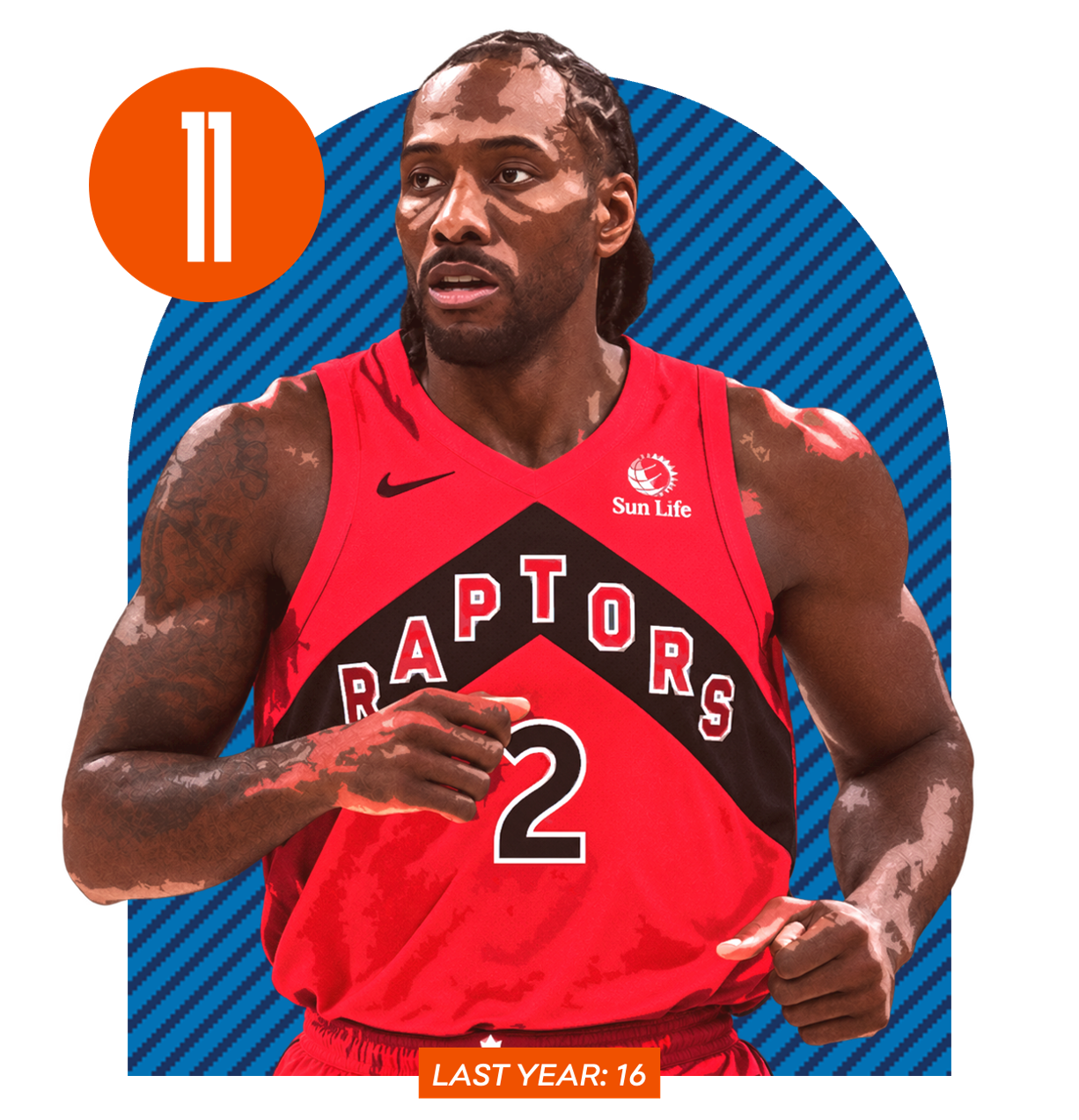
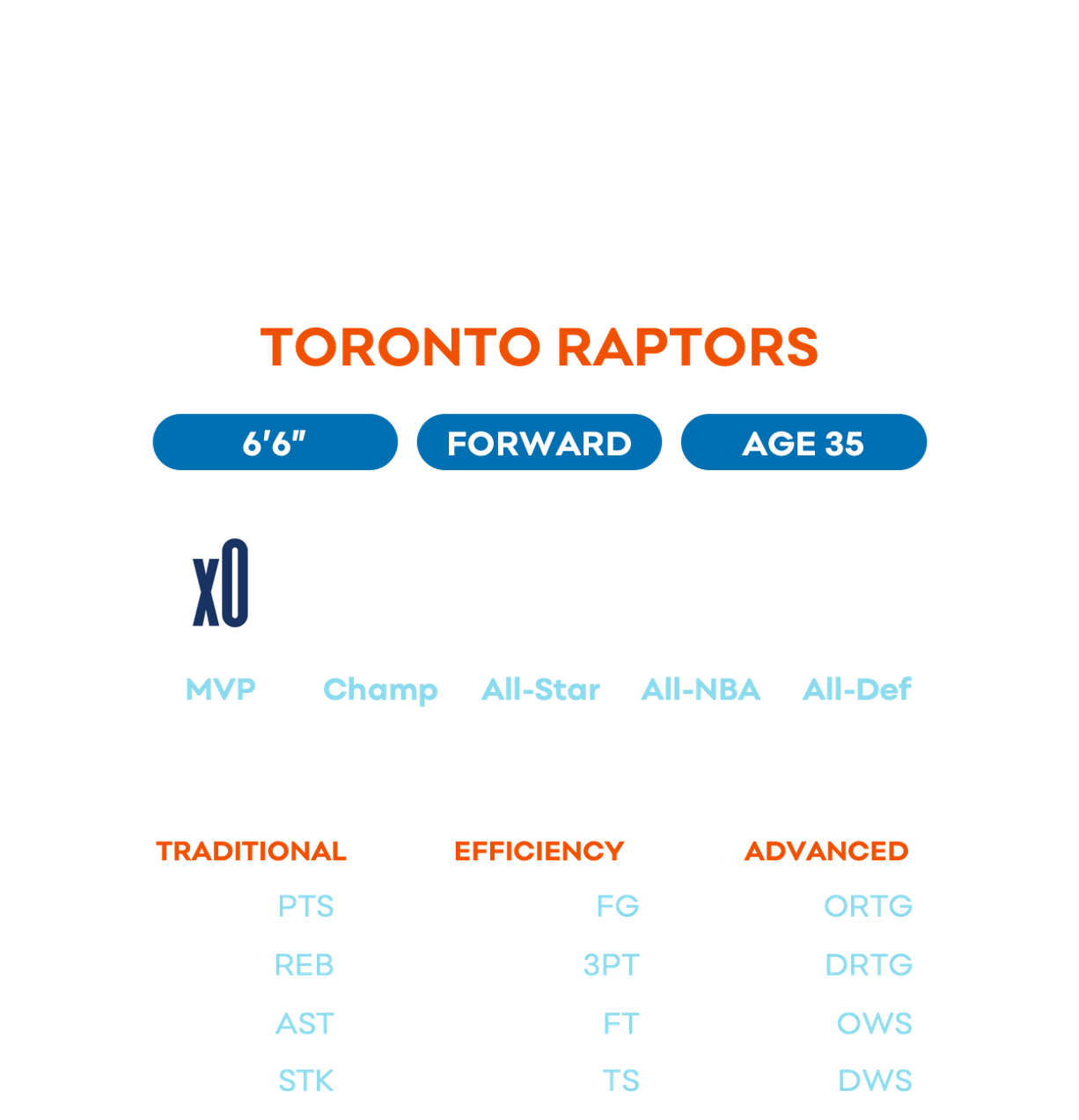
When he’s on the court and at his best, there’s a legitimate argument to be made for Kawhi as one of the seven-to-ten best players in the NBA. He’s a lethal scorer who never gets sped up, can get to his sweet spot as well as anyone, an annual 50/40/90 threat, and is coming off his healthiest season in a while—which culminated in a All-NBA Second Team and a career-high in points per game. Oh, and he’s also a former DPOY that can still clamp you up when needed.
WHY HE’S NOT HIGHER
Sadly, we know the story with Kawhi—the guy just cannot consistently stay on the court. Though he managed 65 games this past season, he’s managed only 44 games played per season since his final year in San Antonio and has made it through only one the past five postseasons unscathed. Not only are his injuries frequent, but they’re often ambiguous and they linger. So, while Kawhi is spectacular when he plays, the greatest ability is availability, and that’s something that he just has not had.
-
WHY HE’S NOT LOWER
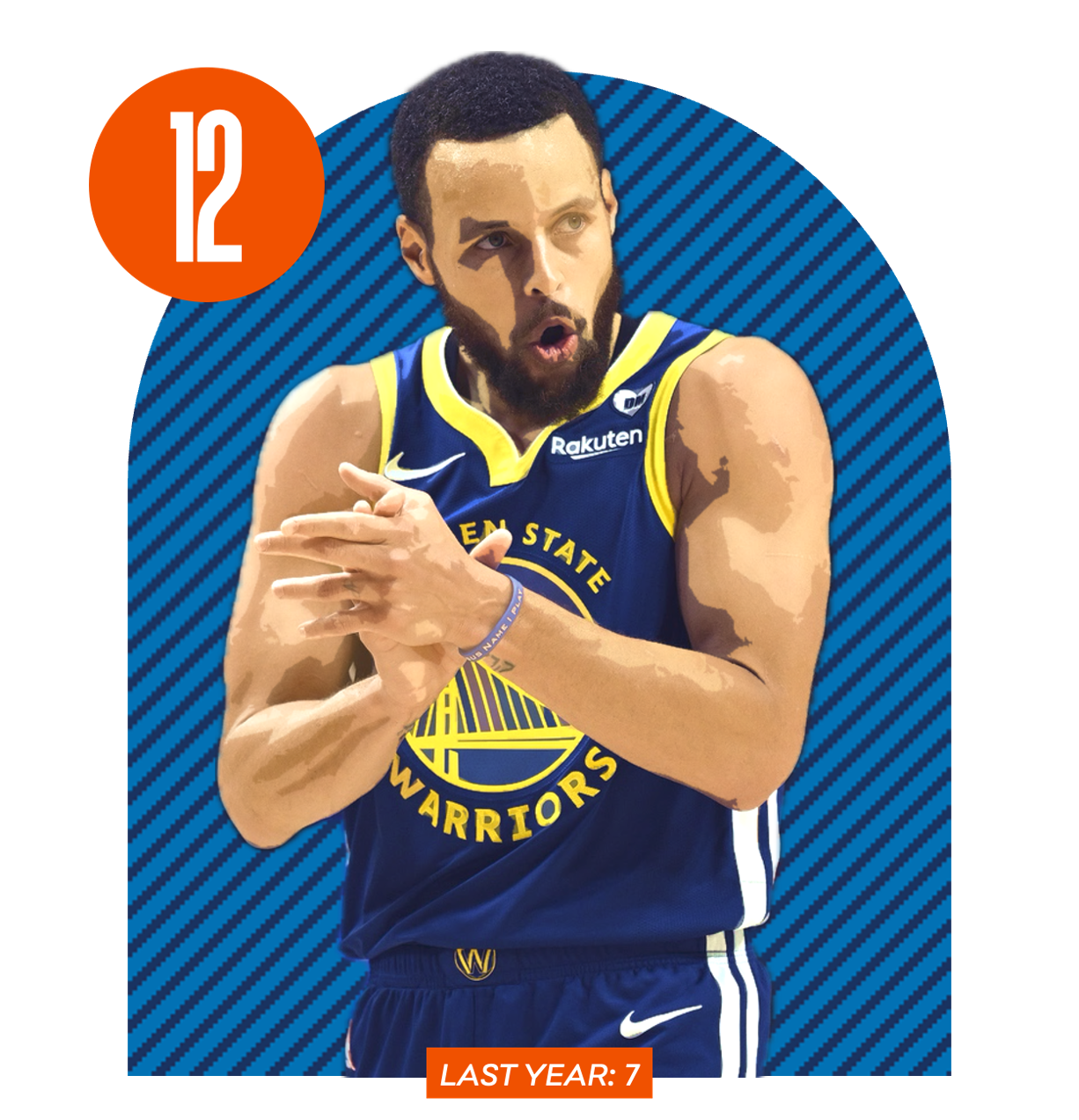
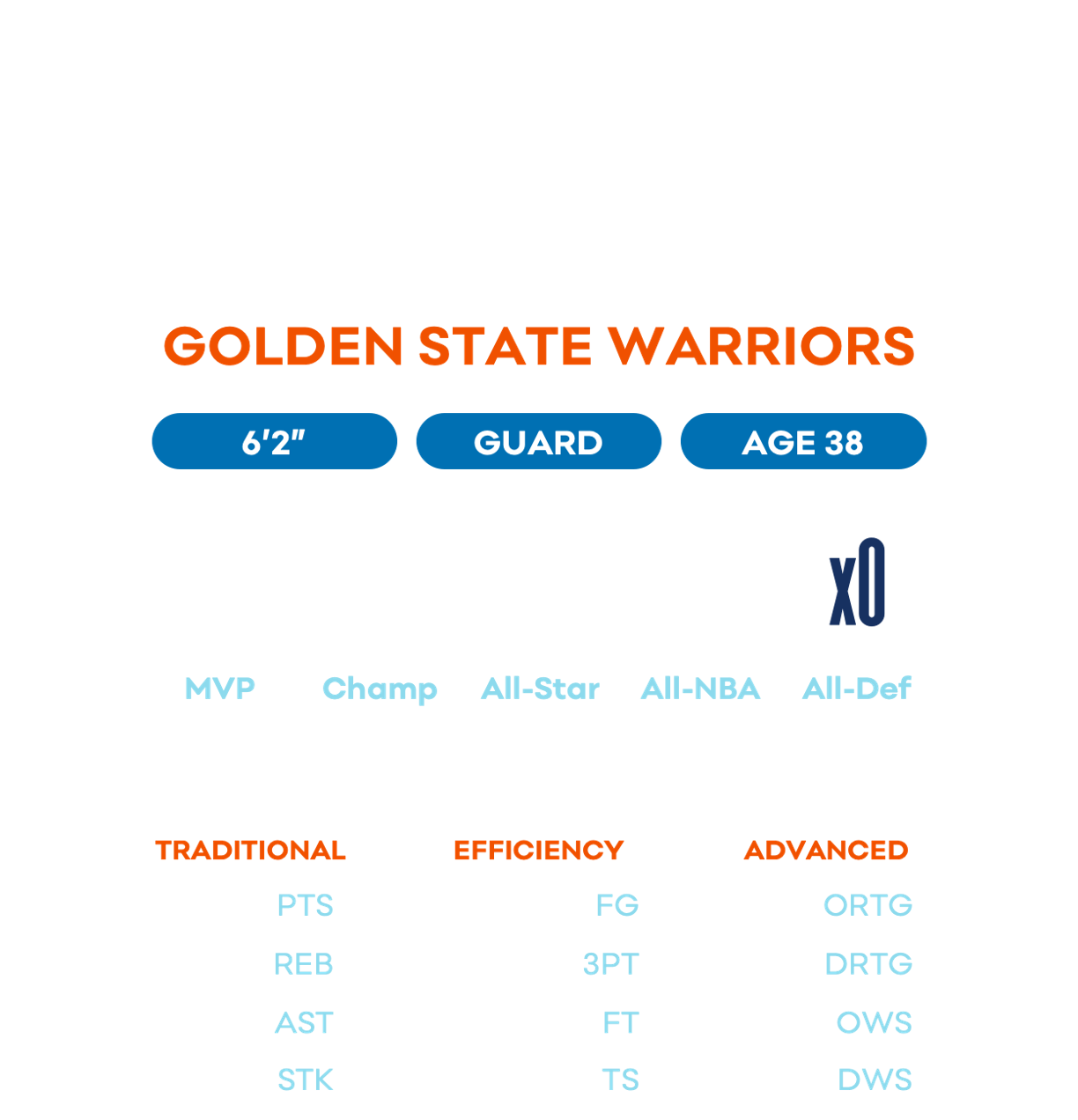
The greatest shooter to ever touch a basketball—with no room for debate—Steph miraculously continues to produce at an All-NBA level into his twilight years. And while his video-game-esque shot is obviously the deadliest part of his game, the threat of that shot is almost equally as dangerous on its own. The gravity he creates on the court is truly like no other player. But you don’t win a unanimous MVP off just shooting alone, as Steph has proven to be one of the greatest connective pieces in the league, has elite handles, a sky-high basketball IQ, and is an underrated finisher at the basket for his size.
WHY HE’S NOT HIGHER
Steph still certainly has his limitations as a small guard who is prone to targeting on the defensive end. Also, now at 38 years old, Father Time might be knocking on the door soon, as he’s posted two of his three worst 3-point shooting seasons the past two years, his advanced numbers have taken a notable dip, and the injuries have become more frequent—managing only 43 games played last season.
-
WHY HE’S NOT LOWER
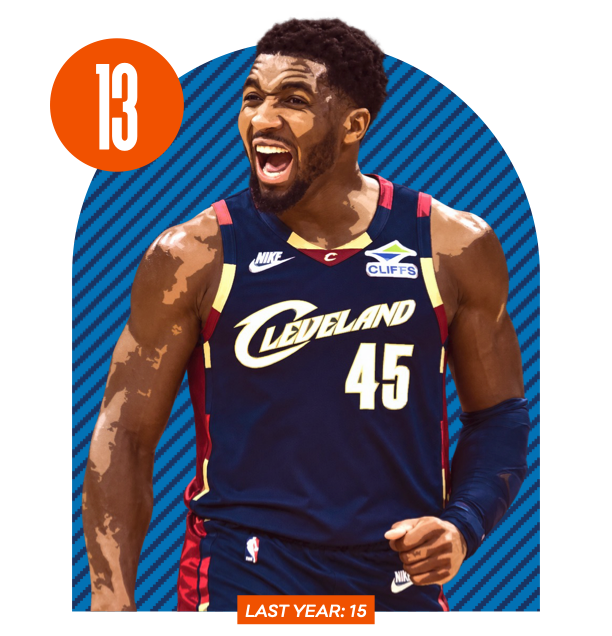
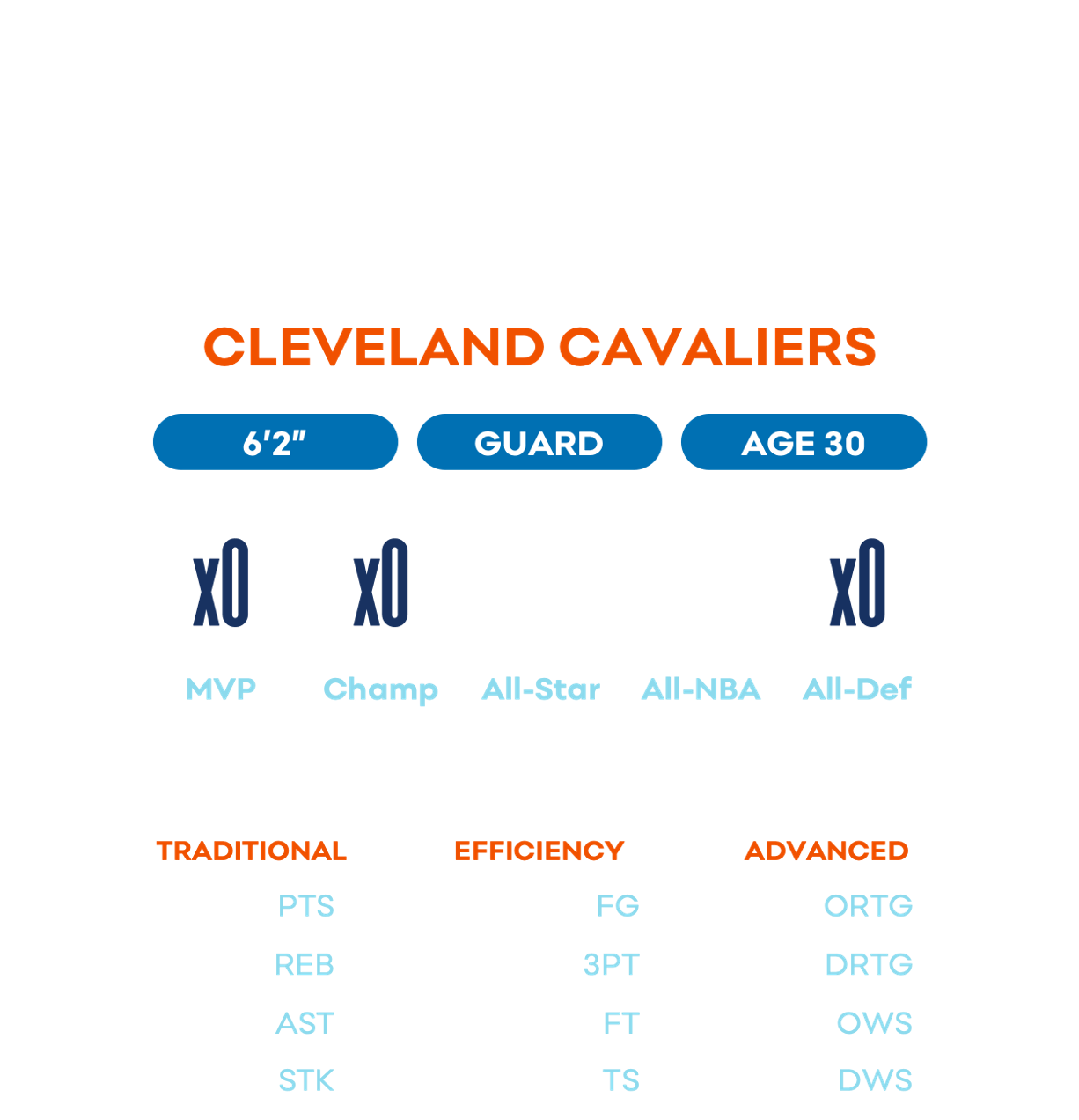
Explosiveness and athleticism meet finesse and skill—Mitchell is a unique combination of these highly valuable skill sets on the offensive end. Despite being a bit undersized at only 6’2”, he has found great success as the rare combo guard turned superstar, with the ability to thrive as either the primary or secondary ball-handler in a modern NBA offense. And after years of early postseason flameouts, Mitchell finally was able to get over the second round hump and lead his team to the conference finals.
WHY HE’S NOT HIGHER
The final results of the one-man-Mitchell show have proven to have a real ceiling come playoff time. Despite finally getting past round two, the Cavs got embarrassed upon getting there, and Mitchell-led teams have been notorious for postseason flameouts as a top seed. And in this most recent postseason run, Mitchell managed only a measly 3.1 assists per game, so questions will remain about his occasional tunnel vision and hero-ball tendencies—and as a result, his overall qualifications as the number-one option.
-
WHY HE’S NOT LOWER
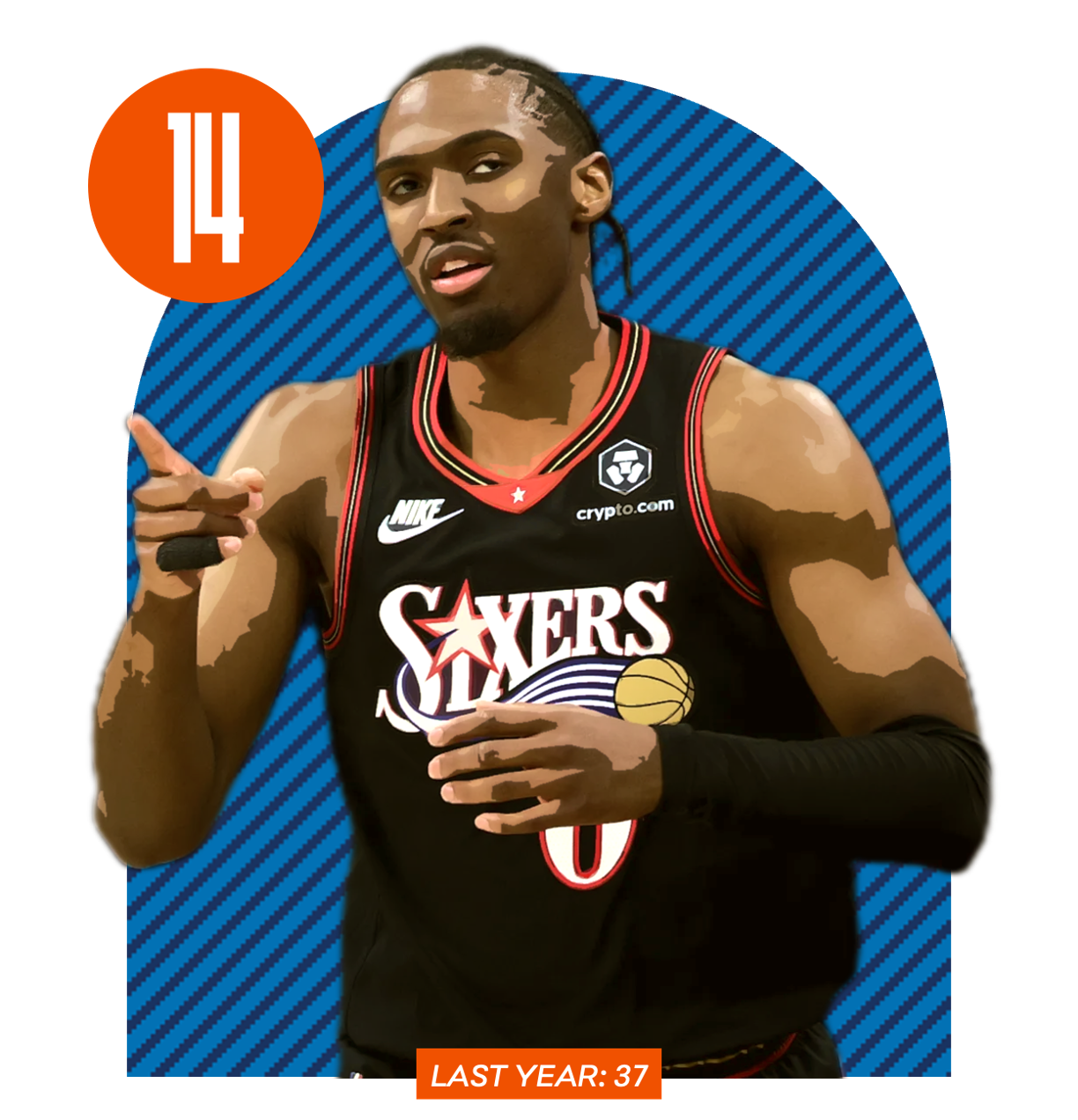
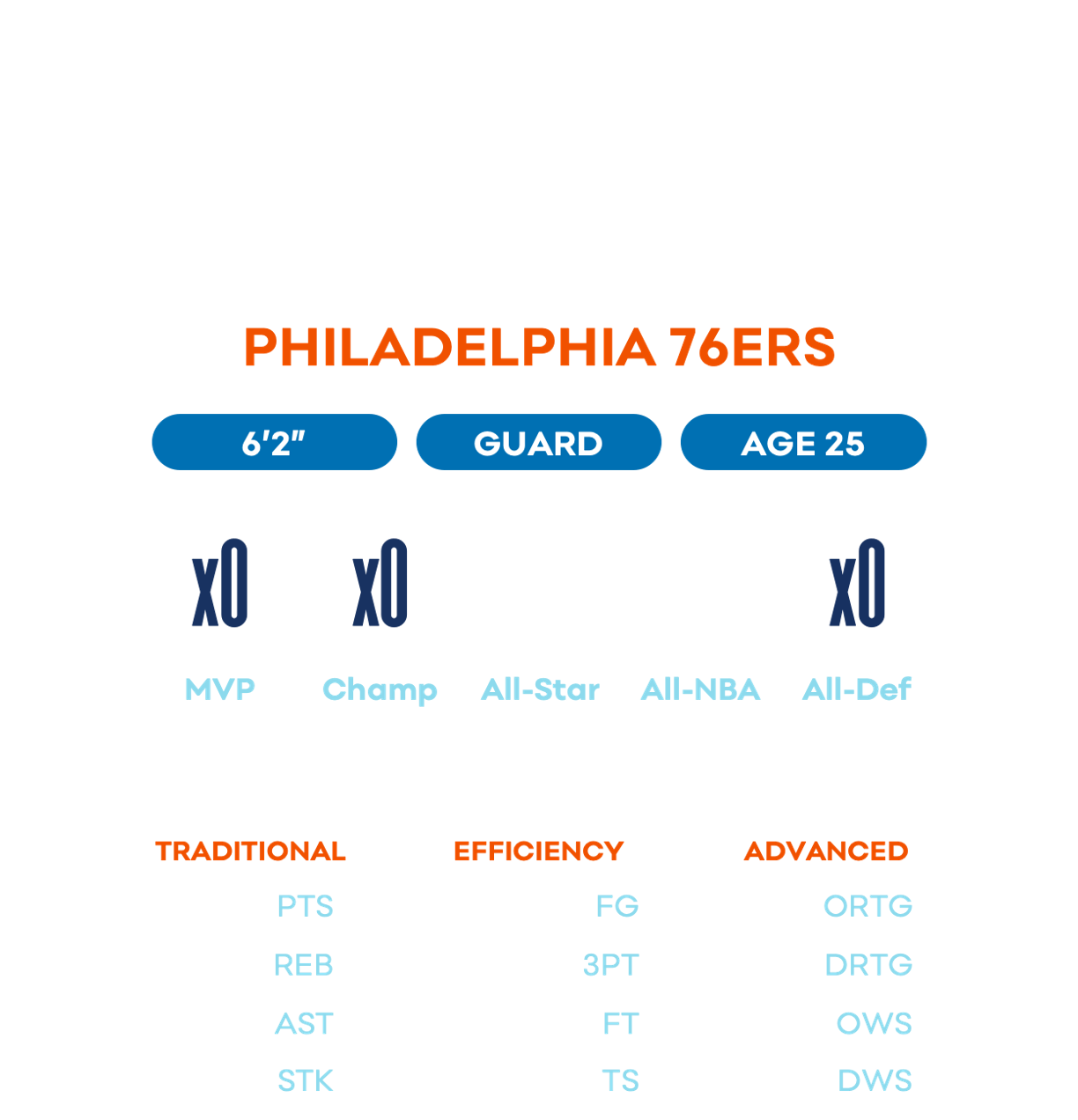
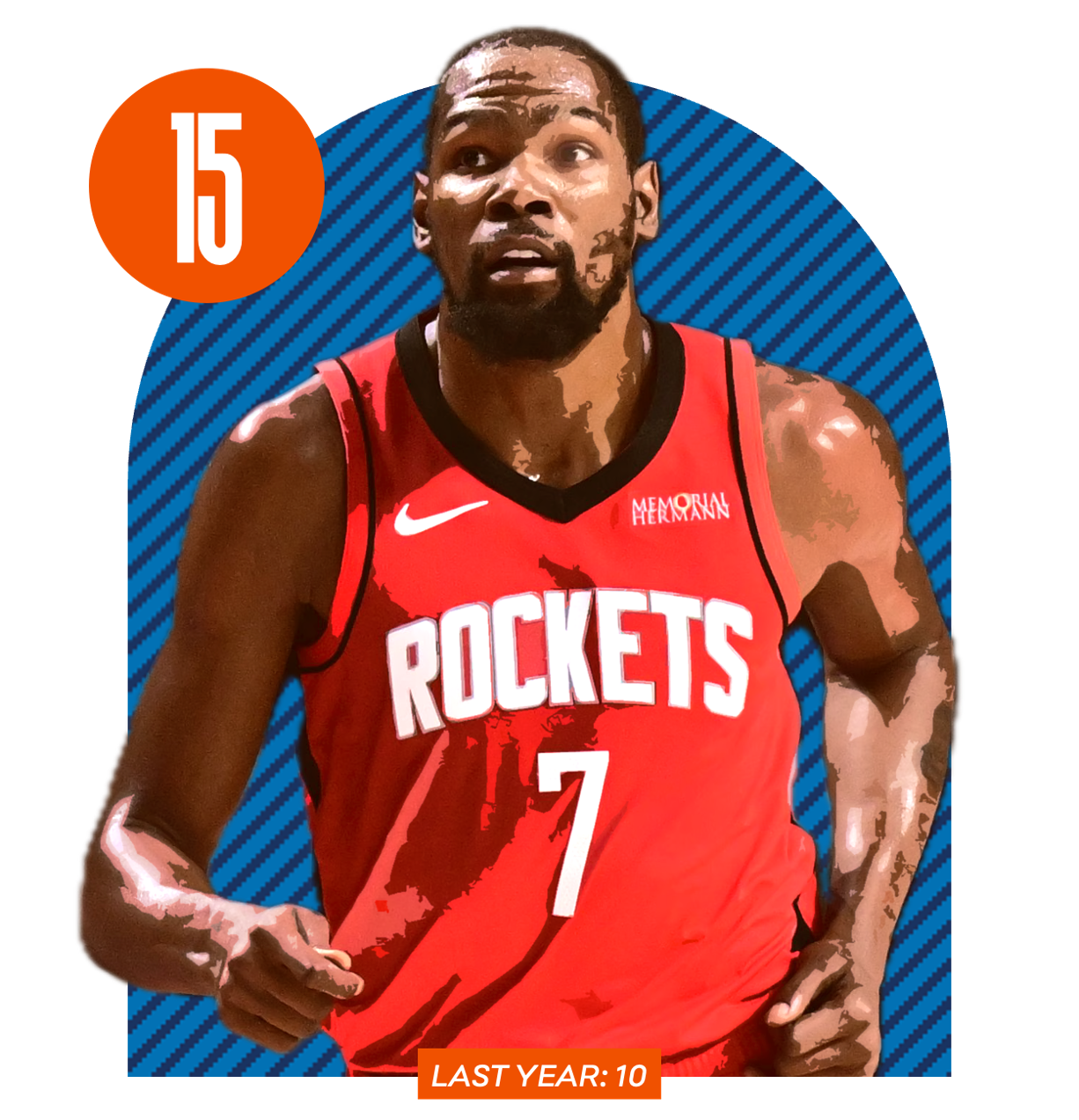
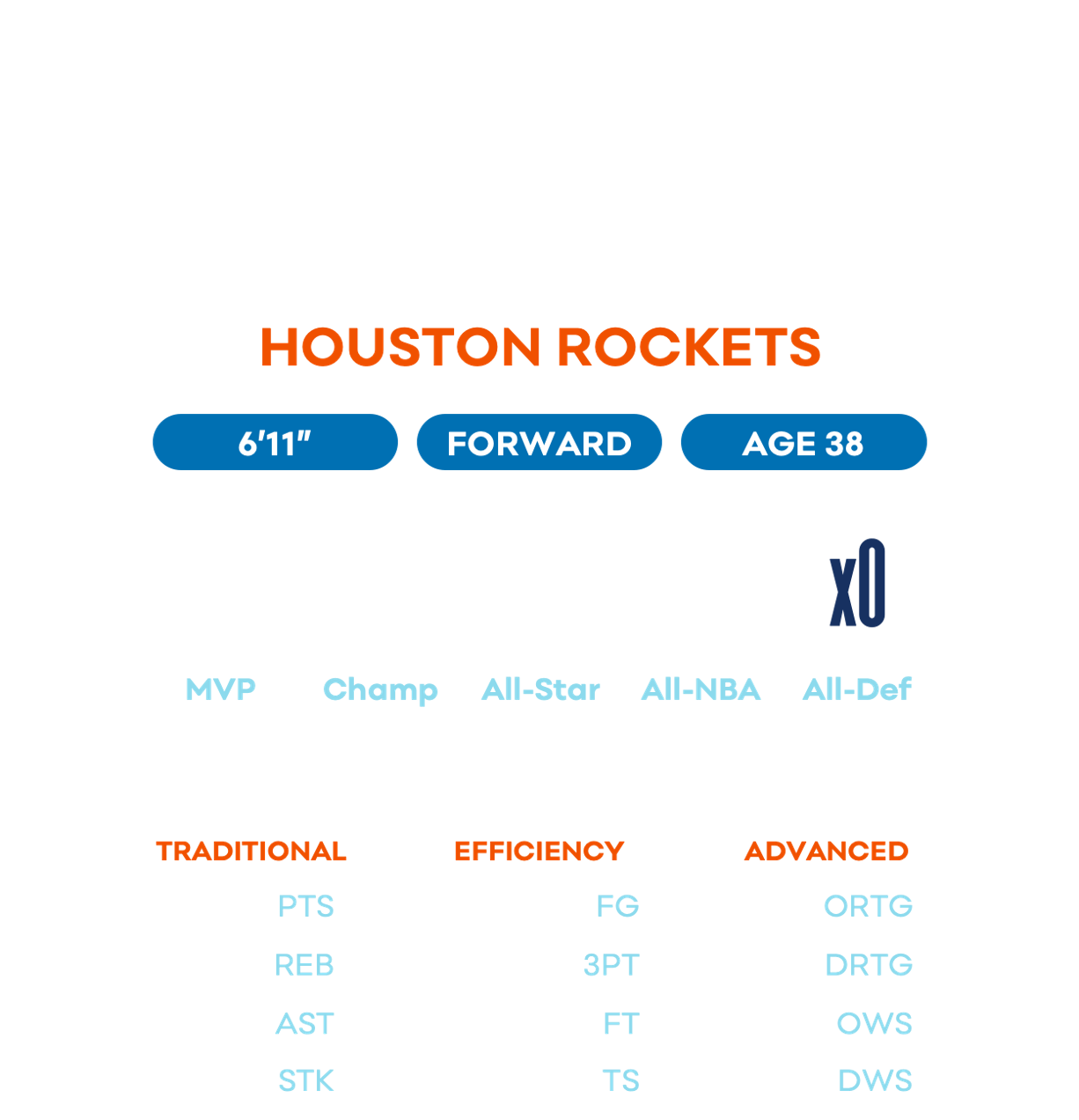
With all of Embiid’s injury issues, it feels like Maxey has firmly grasped the reigns in Philadelphia as the face of the franchise—posting career highs in points, assists, and rebounds, en route to his first All-NBA appearance this past year. He’s established himself as one of the most dynamic scoring guards in the league, with the handle to play either guard position, lightning-quick speed with the ball, and an ability to blow past defenders and get to the basket seemingly at will. He pairs that downhill attack with an incredibly reliable off-the-bounce pull-up jumper and a rare superpower for high-usage guards—he does not turn the ball over.
WHY HE’S NOT HIGHER
Of course, his size will always limit his defensive ceiling, and while he’s developed into a very capable playmaker, he still isn’t quite the natural offensive orchestrator that some of the league’s other elite point guards are. Additionally, as Maxey’s role has expanded and has game has scaled, his efficiency has taken a bit of a dip. In his second and third season combined, he posted .483/.431/.856 splits on 59.9% true shooting, and in the past three seasons, those numbers have dropped to only 45.1% from the field, 36.0% from deep, and 57.5% true shooting.
-
WHY HE’S NOT LOWER
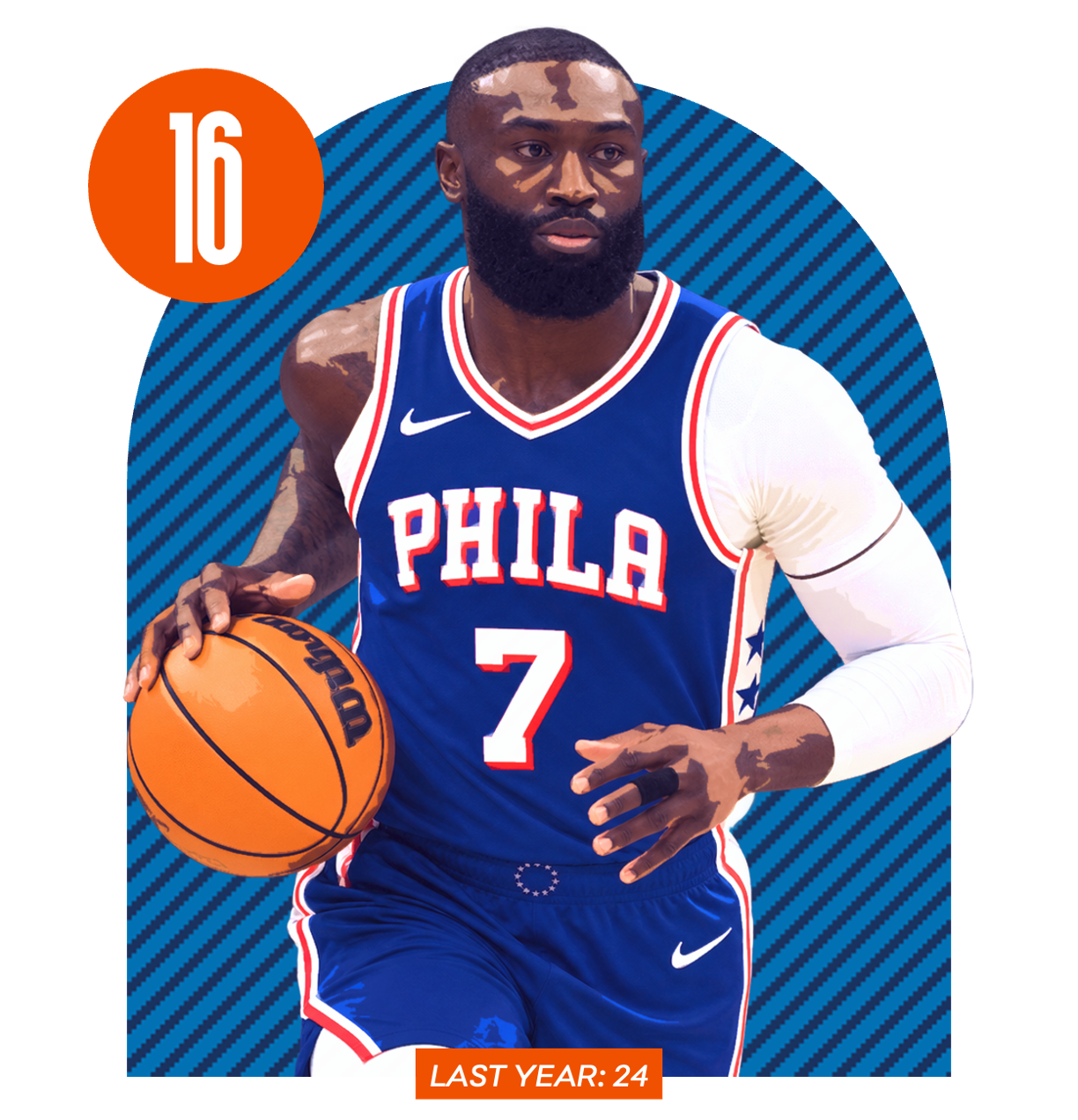
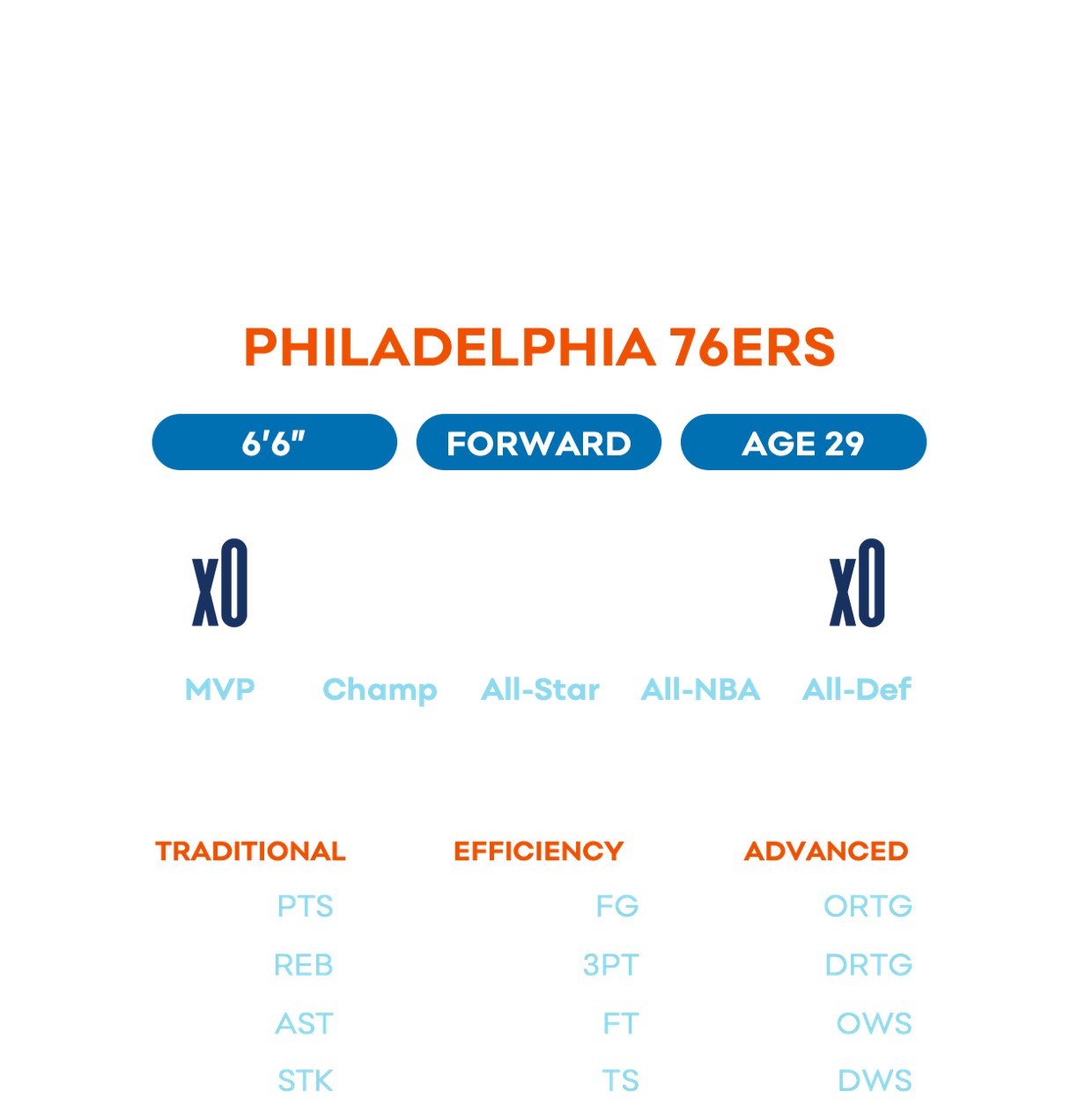
KD has cemented himself as one of the greatest scorers of all time, and he just continues to score and produce with a combination of volume and efficiency that’s unprecedented in NBA history. Since his Achilles injury back in 2019, he somehow has developed into an even more efficient player, putting up .529/.414/.879 shooting splits over the past six seasons combined. KD is a true unicorn and is legitimately unguardable—at nearly seven feet tall, he can get a shot off over any defender from any spot on the court whenever he wants.
WHY HE’S NOT HIGHER
Despite playing 78 games last year, durability has been a concern for KD since the major injury, managing only 59 games played per season over the past six years. Additionally, his advanced stats have noticeably dipped in recent seasons, and the eye test suggests that his numbers aren’t having the same impact on winning they once did—as seen by the fact he hasn’t gotten out of round two since leaving Golden State. And if you’re KD’s teammate and get on his bad side, he will not hesitate to rip you in the Twitter group chats.
-
WHY HE’S NOT LOWER
In the absence of Jayson Tatum, Brown stepped up in a way that not many likely thought was possible. The former Finals MVP posted career highs in points, rebounds, and assists, all while earning Second Team All-NBA honors and leading Boston to 56 wins as the clear-cut number-one option. He lived in the mid-range, consistency competed defensively, and proved he could handle the load as the top dog on offense over an 82 game season.
WHY HE’S NOT HIGHER
Despite the career-best season, Brown’s flaws remain apparent. He’s still very sloppy with his handle, has a tendency for tunnel vision, is an inconsistent 3-point shooter at best, and has posted well below-average offensive advanced stats throughout his career that vastly misalign with his perceived star status. These flaws have been particularly illuminated during his inconsistent postseason career—best highlighted by his near one-to-one assist-to-turnover ratio. He also appears to have some level of ego that may have ultimately led to his departure from Boston.
-
WHY HE’S NOT LOWER
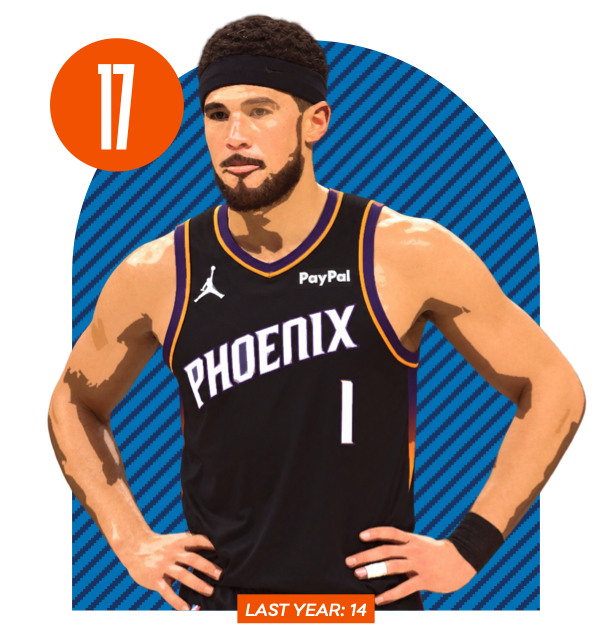
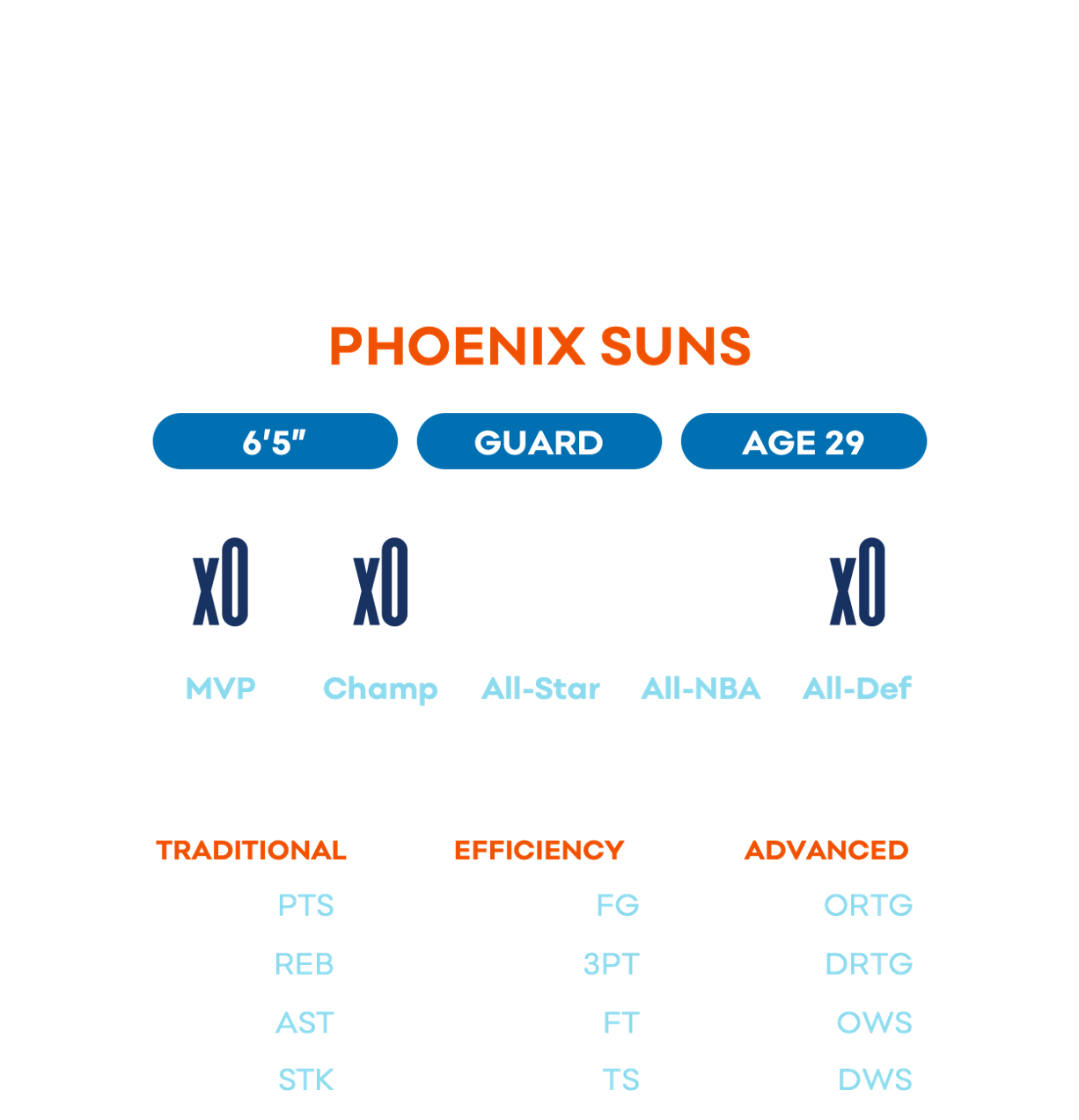
Faced with rock-bottom expectations last season, Booker helped a Phoenix team deprived of talent over perform and get back to the playoffs—which required a massive level of offensive responsibility and focus from opposing defenses. In the process, Book became one of only three players to average at least 25.0 points in each of the past eight seasons—needless to say, he is a certified professional bucket-getter. He can operate and score at all three levels but does most of his damage as a midrange assassin, and in recent years, has taken significant strides as a lead playmaker. And of course, he’s been First Team All-NBA player and the leading scorer on an NBA finalist—something a lot of his peers cannot similarly claim.
WHY HE’S NOT HIGHER
Despite the Suns’ unexpected resurgence and what should be Booker’s prime seasons, it feels like Booker has stagnated a bit as a player the past few seasons. His efficiency has taken a hit, his defensive effort has been inconsistent, and despite his reputation as a shooter, the 3-point percentage strangely remains below league average. And despite Phoenix’s return to the postseason, their success was largely predicated on their defense, and Booker averaged just 21.3 points and looked passive at times as the Suns got swept.
-
WHY HE’S NOT LOWER
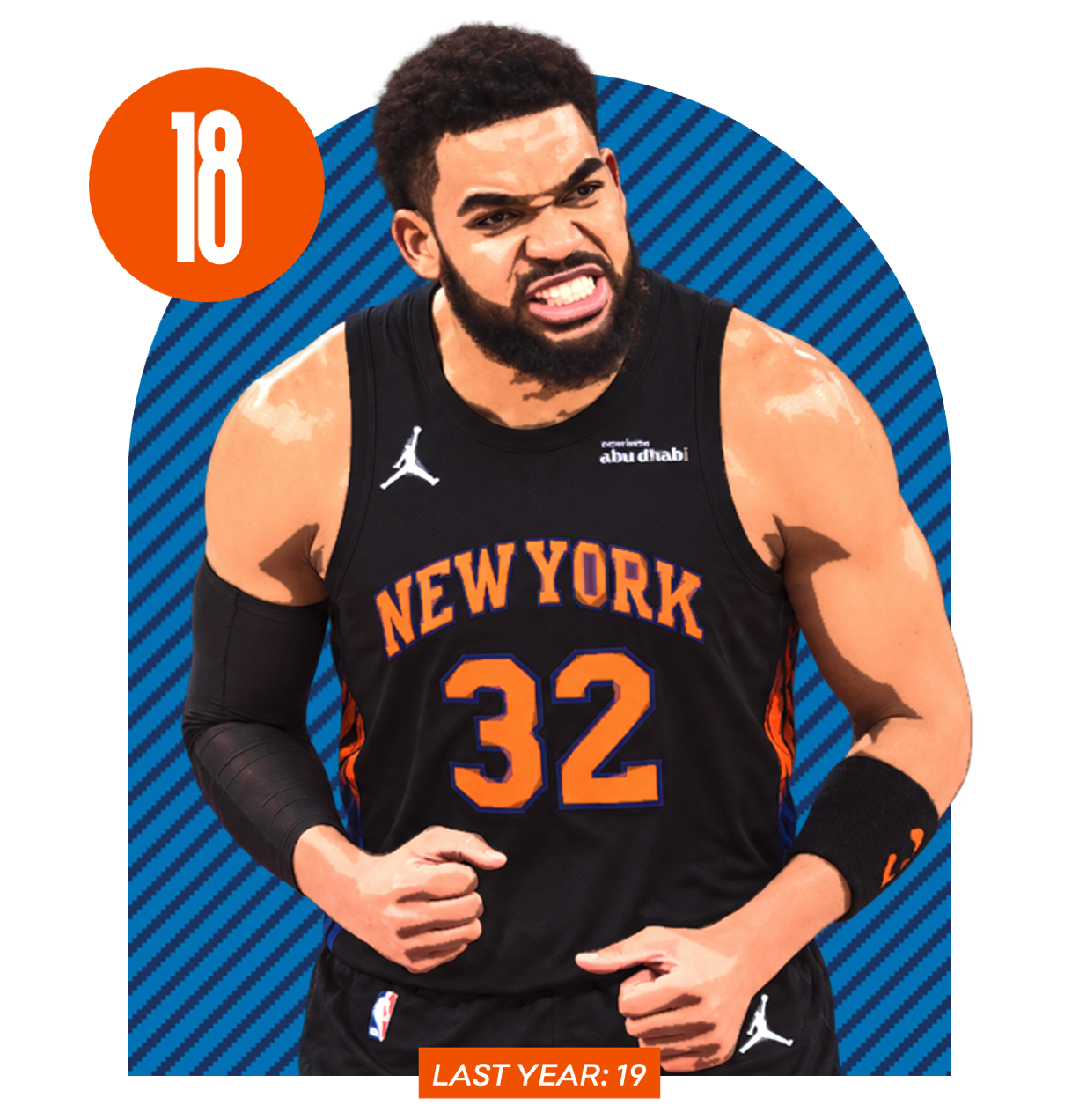
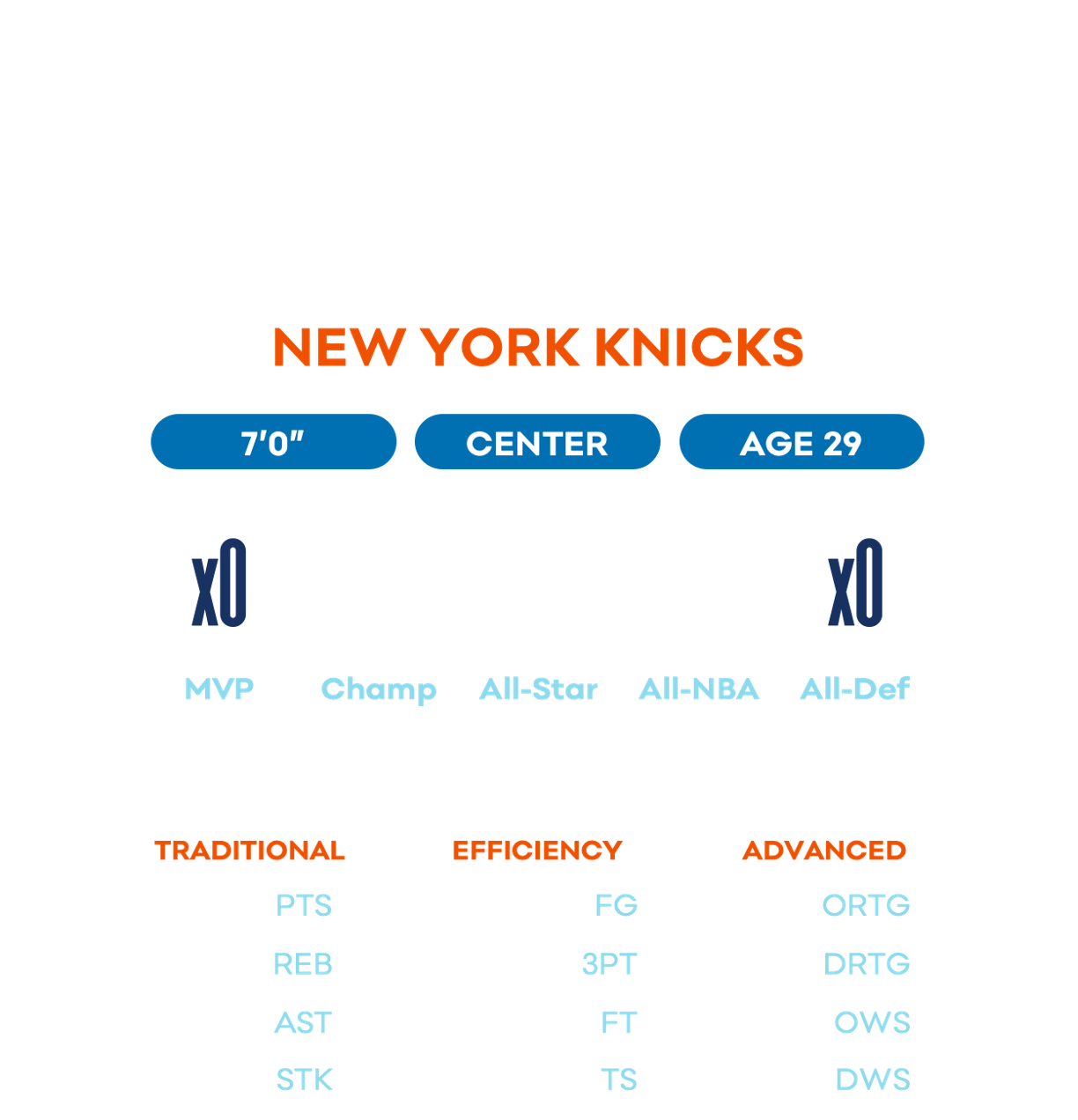
The self-proclaimed “greatest shooting big man of all time” might actually have a decent argument backing up that assertion. Having shot 39.7% from deep in his career, Towns is the NBA’s all-time leader in 3-point percentage among players 6’11” or taller. He has a generational offensive repertoire that goes well beyond just his shooting touch, and this past season, finally settled into his ideal role and unlocked the Knicks’ offense, culminating in an NBA championship. His elite rebounding, improved defensive focus and effort, and usage as a passer and playmaker out of the high post were essential puzzle pieces to New York’s title run.
WHY HE’S NOT HIGHER
While KAT did lock in like we haven’t seen him before this past postseason, the shortcomings with Towns are well documented. He has historically struggled defensively in the biggest moments, displayed low-IQ decision-making, and remains a lead candidate for best dumb-fouler in the league. A flawed but uniquely talented player, Towns can be wildly frustrating, so the question will remain if KAT truly “solved” his issues during this run, or if he’ll revert back to bad habits.
-
WHY HE’S NOT LOWER
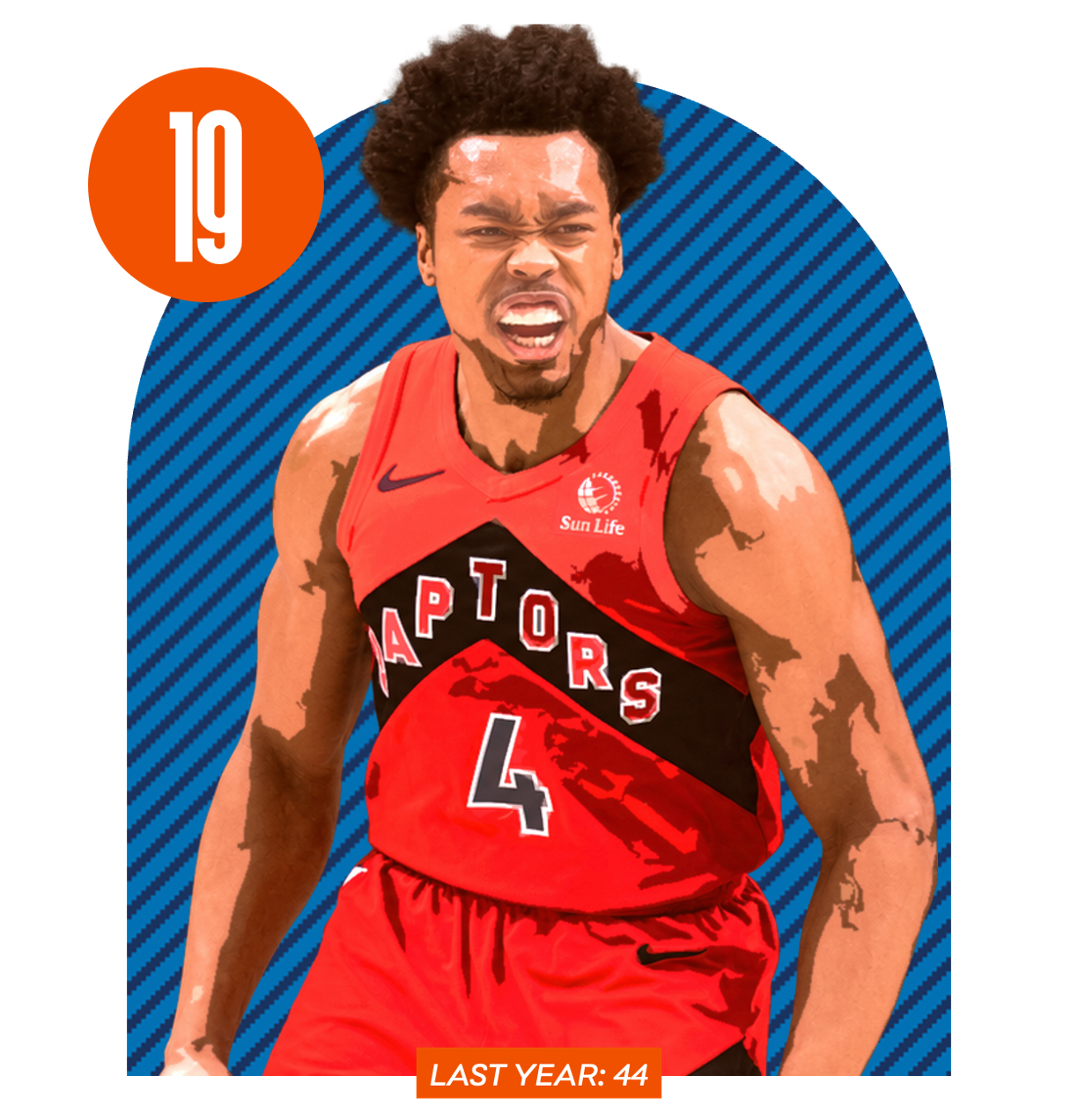
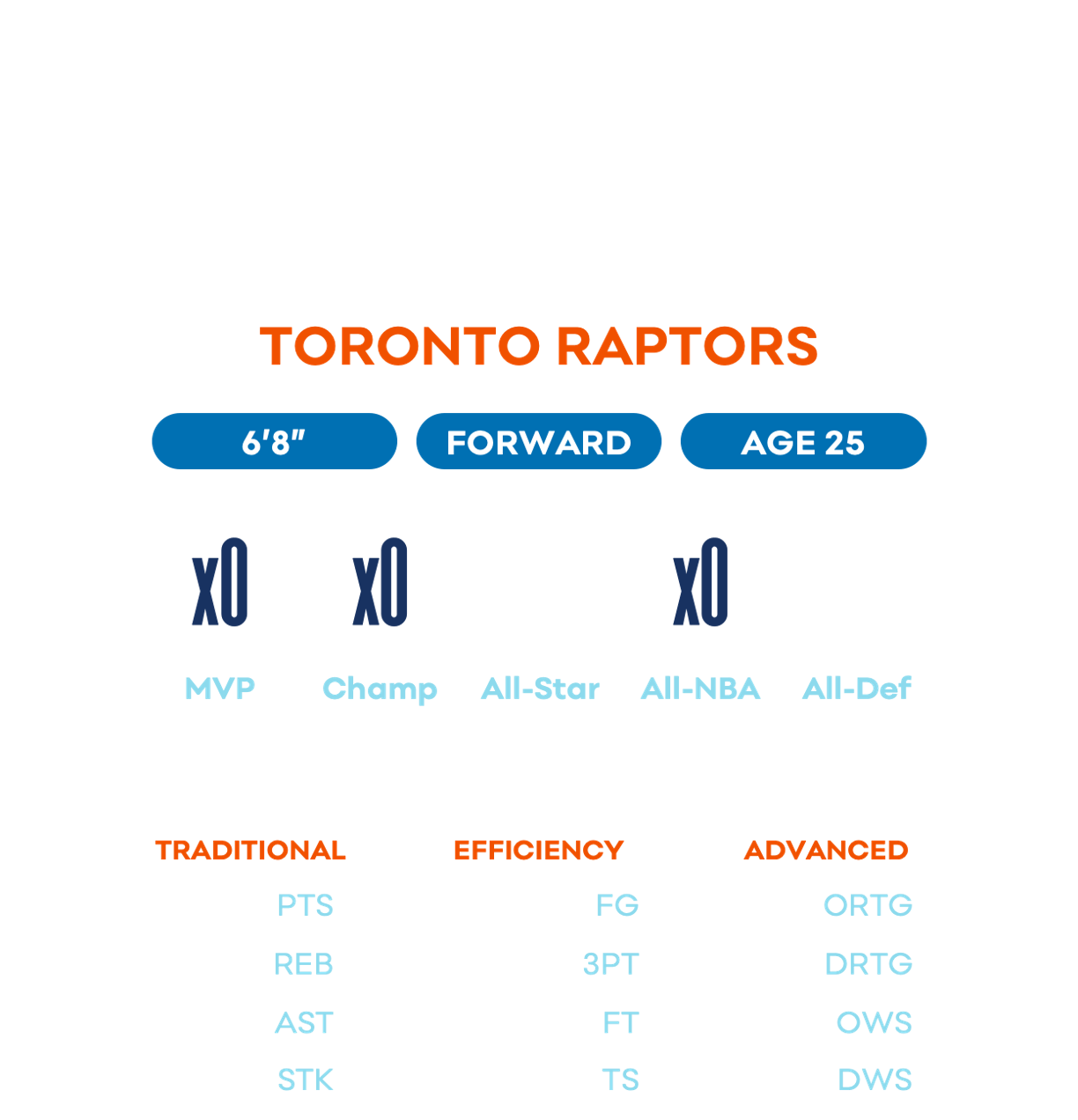
Barnes is a Swiss Army knife, do-it-all forward who can impact the game in so many ways. He’s an ideal modern-day wing who can handle the ball like a guard, is dangerous in transition, one of the best positional playmakers in the league, and established himself this past year as one of the best, most-versatile defenders in basketball—earning All-Defensive honors and finishing fifth in DPOY voting. And after three straight years in the lottery, Scottie not only led the Raptors back to the postseason, but absolutely shined once he got there. He was the best player in the series by a long shot—averaging a gaudy 24.1 points, 8.6 assists, and 6.1 rebounds on .509/.381/.796 shooting splits, showing real development as a half-court offensive threat both for himself and his teammates.
WHY HE’S NOT HIGHER
While there’s no question Barnes has established himself as a high-impact player on a winner, the question remains in what capacity he can lead a team offensively. He’s still an unreliable perimeter shooter—hitting just 30.4% from deep this past season and 30.1% for his career—and his self-creation skills remain a bit clunky at times. So yes, his skill set is highly valuable and translatable, but the few holes he does have make it hard to see him ever being the top guy in the pecking order—which is okay, but does put a ceiling on him as a player, and may result in his destiny being an overqualified number two next to a more polished go-to scorer.
-
WHY HE’S NOT LOWER
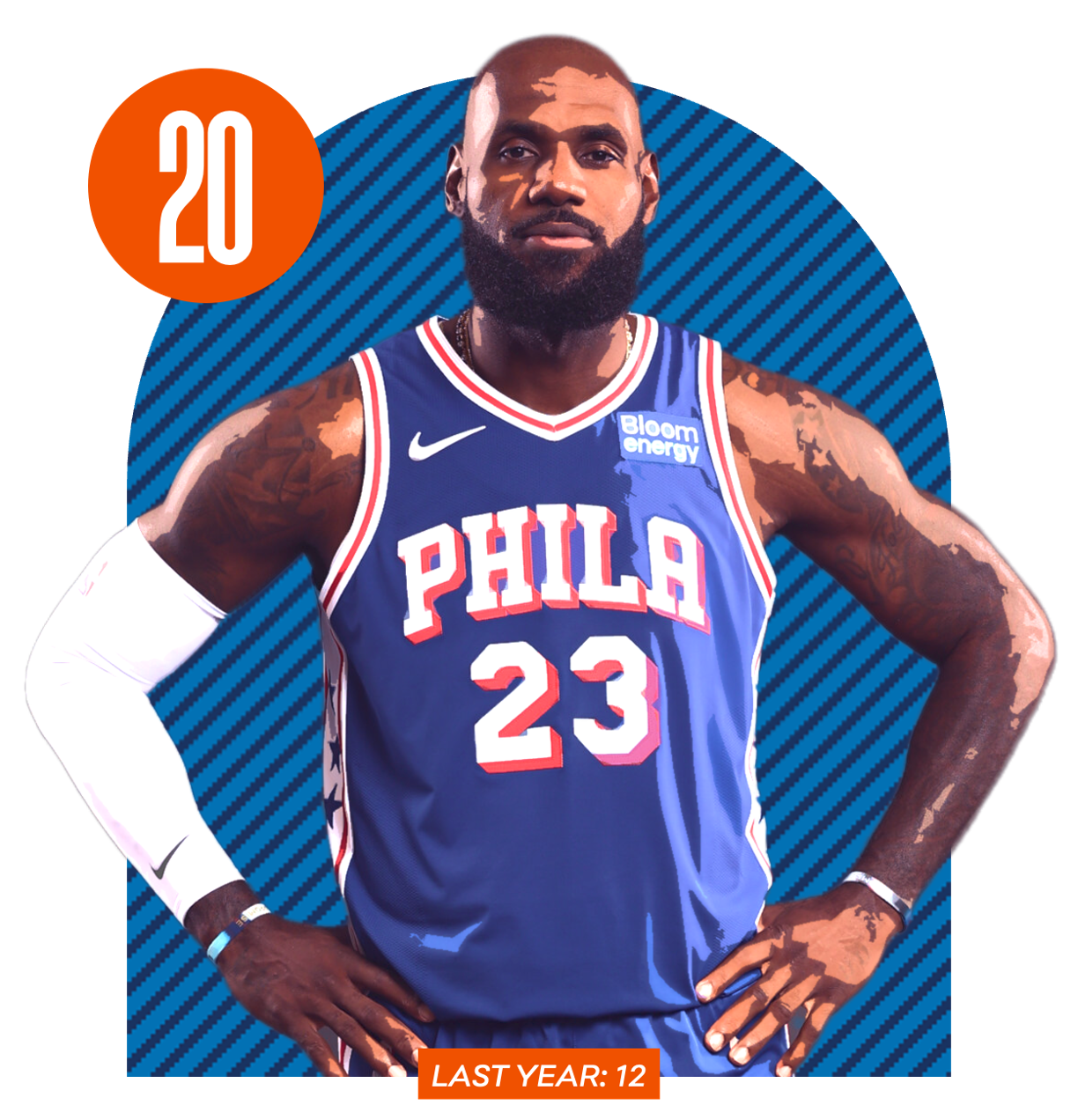
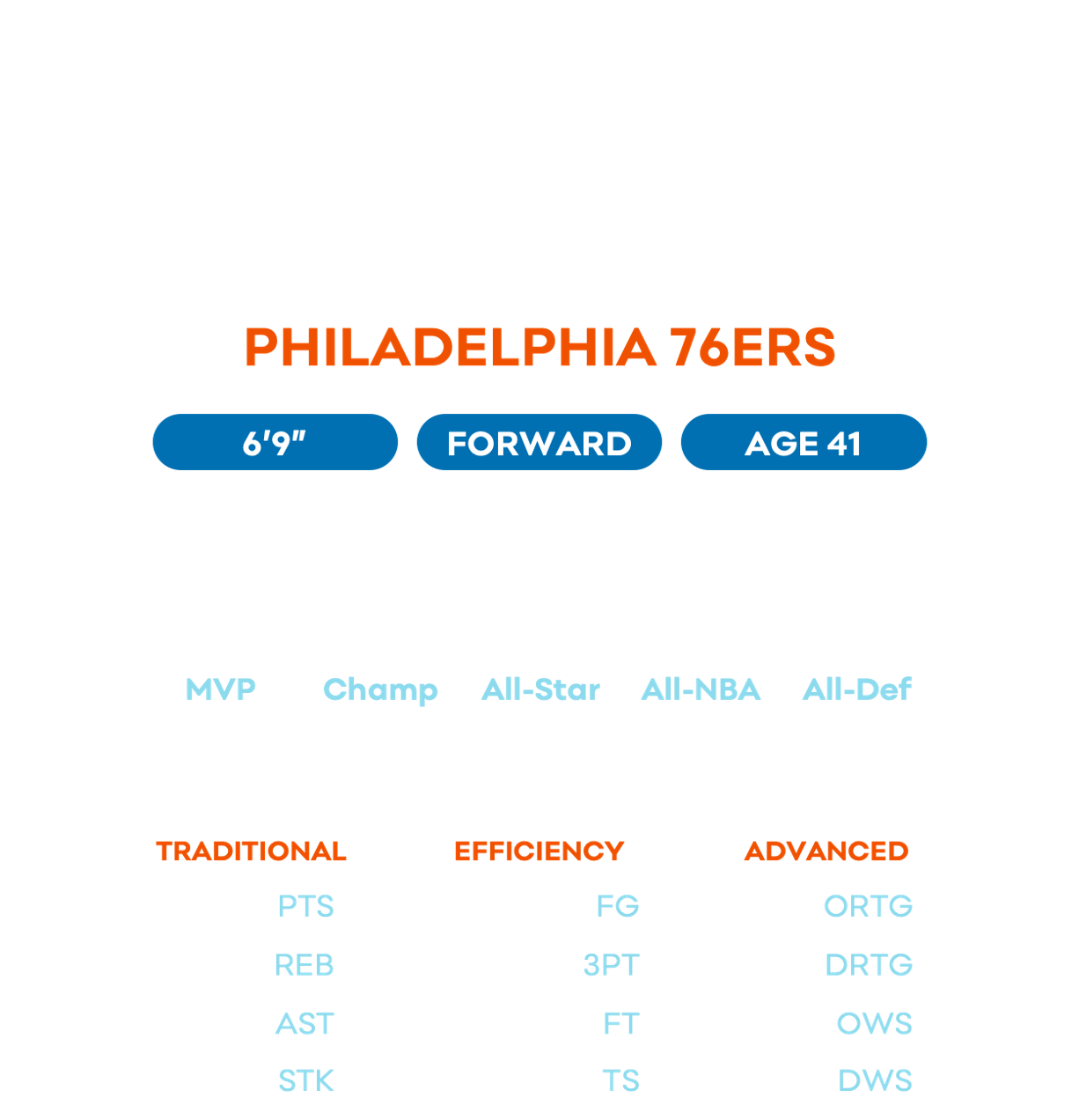
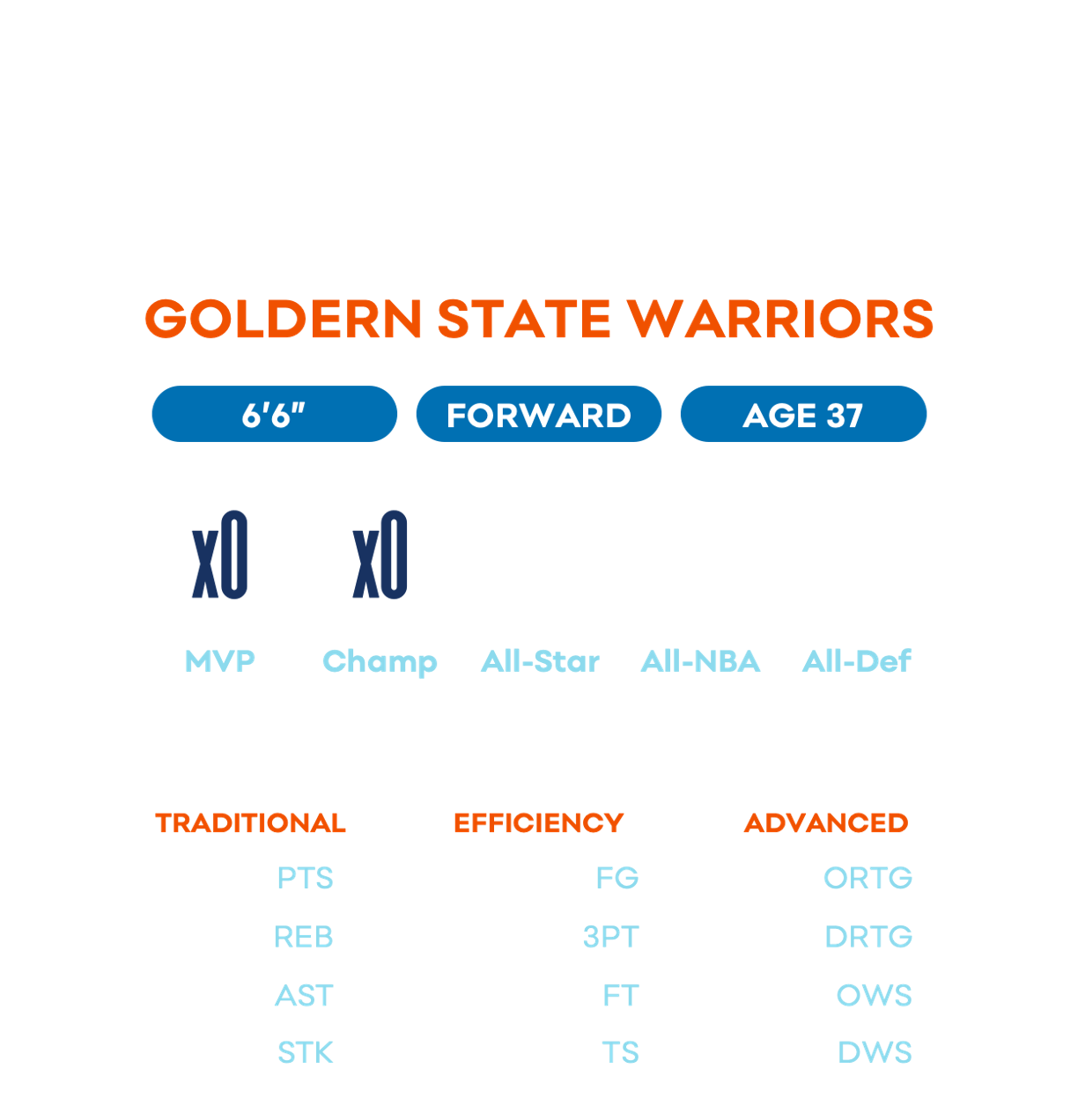
The NBA’s all-time leading scorer. A four-time champion. A four-time MVP. At worst, the second-best basketball player to ever live—and, at best—the G.O.A.T. The résumé is undeniable for LeBron, but somehow, some way, he continues to defy Father Time. Even at the ripe age of 41, he single-handedly led the Lakers to a first round series win despite being down both Luka and Austin Reaves, and he continues to put up numbers that the average player could only dream of producing—even in their prime years. LeBron is still an elite scorer with a god-level basketball IQ who continues to display ridiculous evolution and adaptability to his game—willing and able to do the little things that help his team win, but still able to take over a game as the offensive engine if needed.
WHY HE’S NOT HIGHER
While Father Time hasn’t won the battle against LeBron yet, he’s definitely starting to get some worthy punches in, and even with his sustained statistical excellence, an ever-so-slight decline has been apparent. His advanced stats continue to dip ever-so-slightly, his defensive effort has become increasingly inconsistent, he posted his lowest scoring average since his rookie season, and injuries limited him to only 60 games. And while he remains capable of spectacular individual performances, he simply cannot sustain that level of dominance on a nightly basis as the number-one option anymore, and is best suited as a superstar, do-it-all complementary player that can pick his spots depending on what’s asked of him.

-
WHY HE’S NOT LOWER
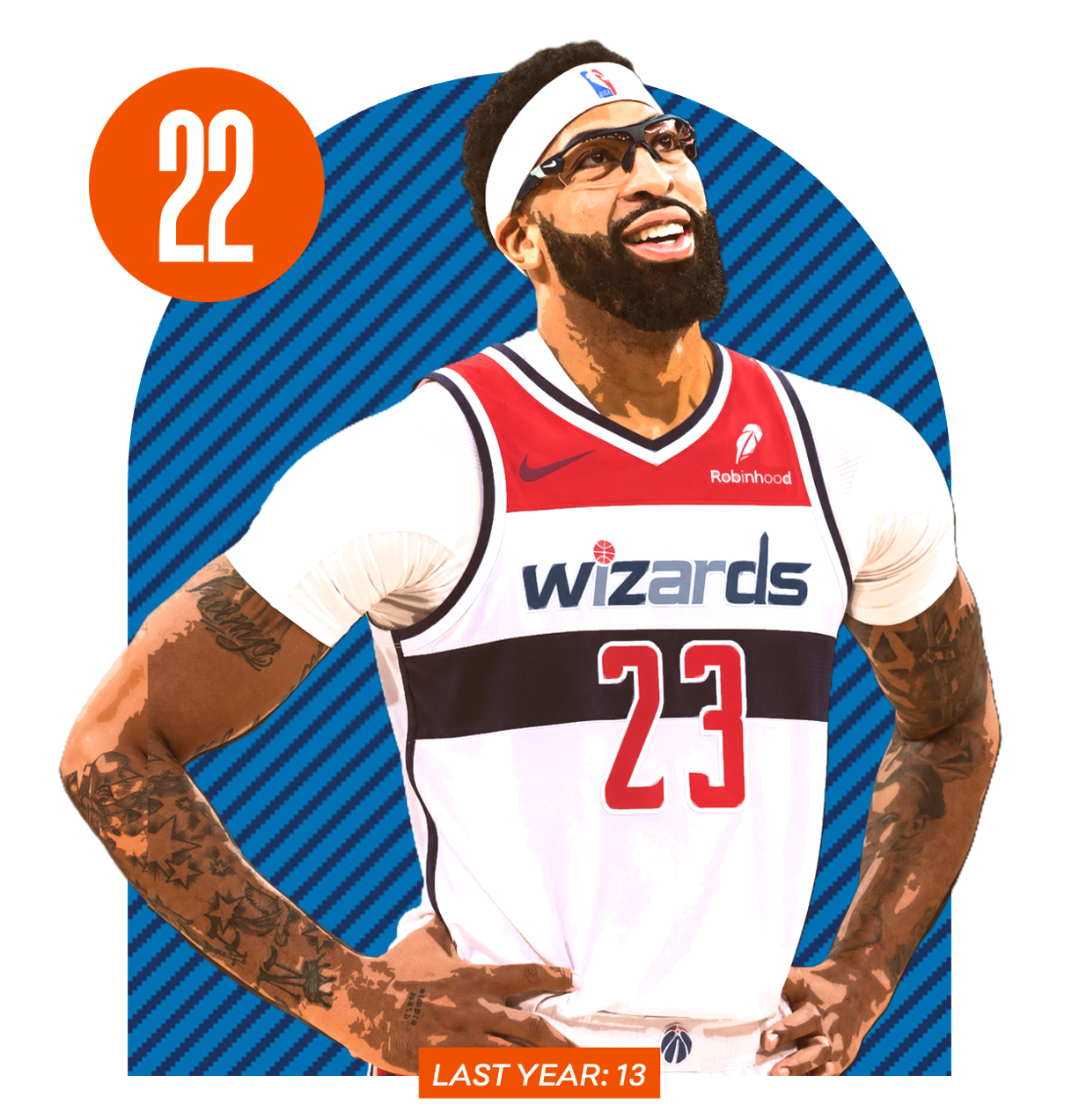
Wherever you stand on Jimmy, there’s no denying the big-time performances we’ve seen out of him when the lights are brightest. The highs that Butler reached in Miami are unrivaled by most other superstars across the league—taking a talent-deprived group of role players to the Finals not once, but twice. He’s a uniquely low-maintenance offensive player who is willing to defer most of the time but has a knack for reading the room when his team needs him to be aggressive. He’s among the best passers and playmakers at the forward position in the league, remains a great defensive player, gets to the line at an elite level, and takes remarkably good care of the ball for a player of his usage—all culminating in a high-impact, incredibly efficient, advanced-stats darling of a player.
WHY HE’S NOT HIGHER
Already a historically injury-prone player, Jimmy suffered the most significant injury of his career this past season—tearing his ACL in January, which will hold him out for the majority, if not all, of the upcoming season. He is now 37 years old and coming off one of the most devastating injuries in basketball, so it’s fair to question just how much Jimmy has left in the tank. He’s never been the most reliable regular-season performer to begin with, and for a player whose game relies so heavily on physicality and getting downhill, losing even half a step could be career-altering.
-
WHY HE’S NOT LOWER
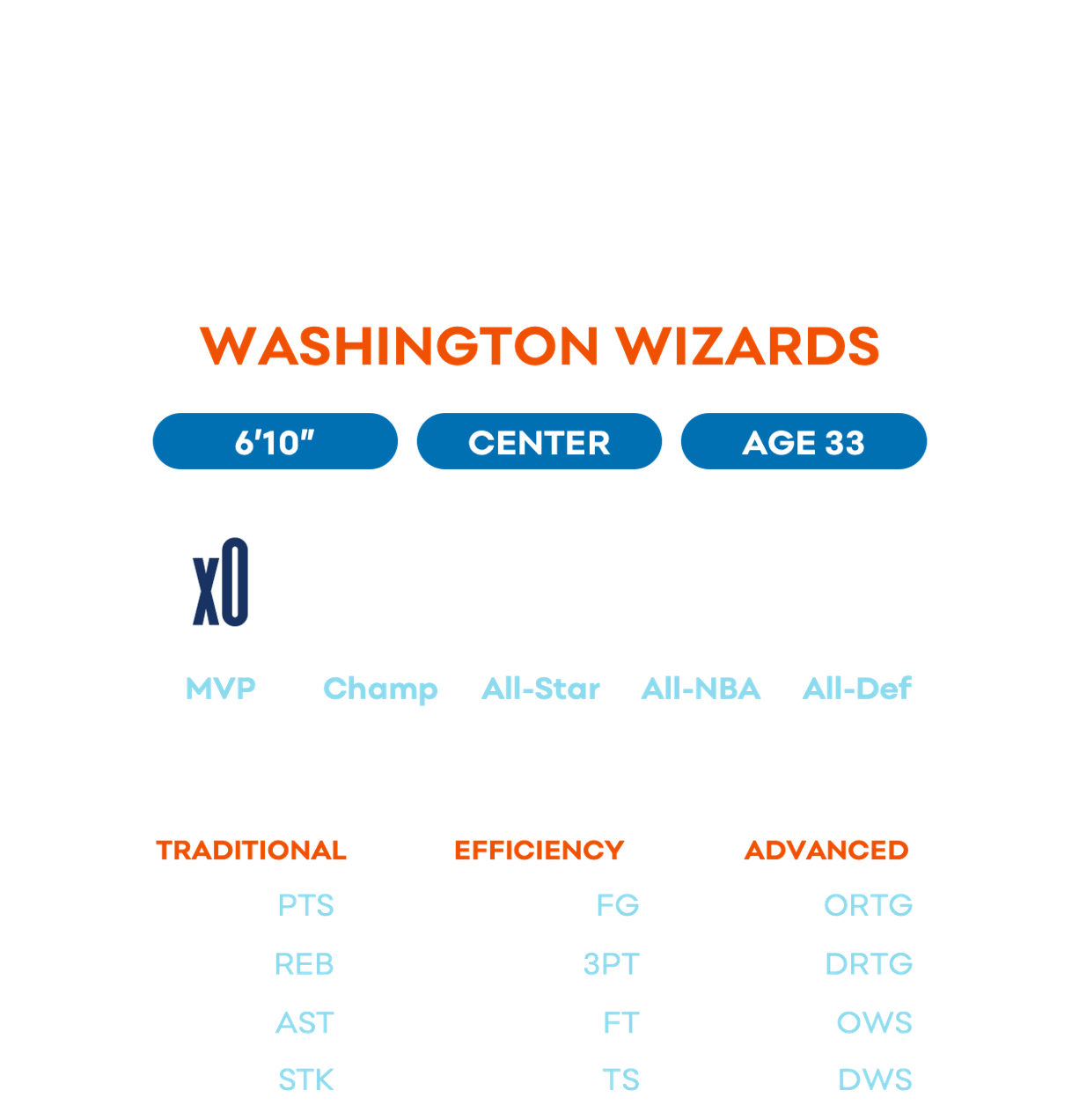
Overshadowed by the public outrage of Luka Dončić being traded, it’s easy to forget how good of a player Davis is as well. AD remains a monster two-way player, and it’s what he can do on the defensive end of the court that sets him apart as a generational talent. If you were creating the ideal modern defensive big in a lab, AD is likely what you’d end up with due to his combination of versatility and rim protection. He can switch onto smaller perimeter players, guard bigs straight up about as well as anyone, and is a terrifying shot-blocker. On top of all that, he’s averaged 24+ points per game in 9 of his last 12 seasons and has been one of the most dominant interior scorers of his generation—a “pencil-him-in” 20-and-10 when healthy.
WHY HE’S NOT HIGHER
There is a reason AD was viewed as such a downgrade to Luka in Dallas, and this past season did absolutely nothing to change that perception. Injuries limited him to just 20 games, and his production dipped to 20.4 points on 50.6% from the field—both significant steps back from his previous standards. He remains a poor jump shooter, is far more effective as a play finisher than a primary creator, and at 33 years old, his durability issues are becoming impossible to overlook. They don’t call him “Street Clothes” and “Alternate Day-vis” for nothing—he’s averaged less than 50 games played per year over the past eight seasons combined and remains one of the most made-of-glass players in the NBA.
-
WHY HE’S NOT LOWER
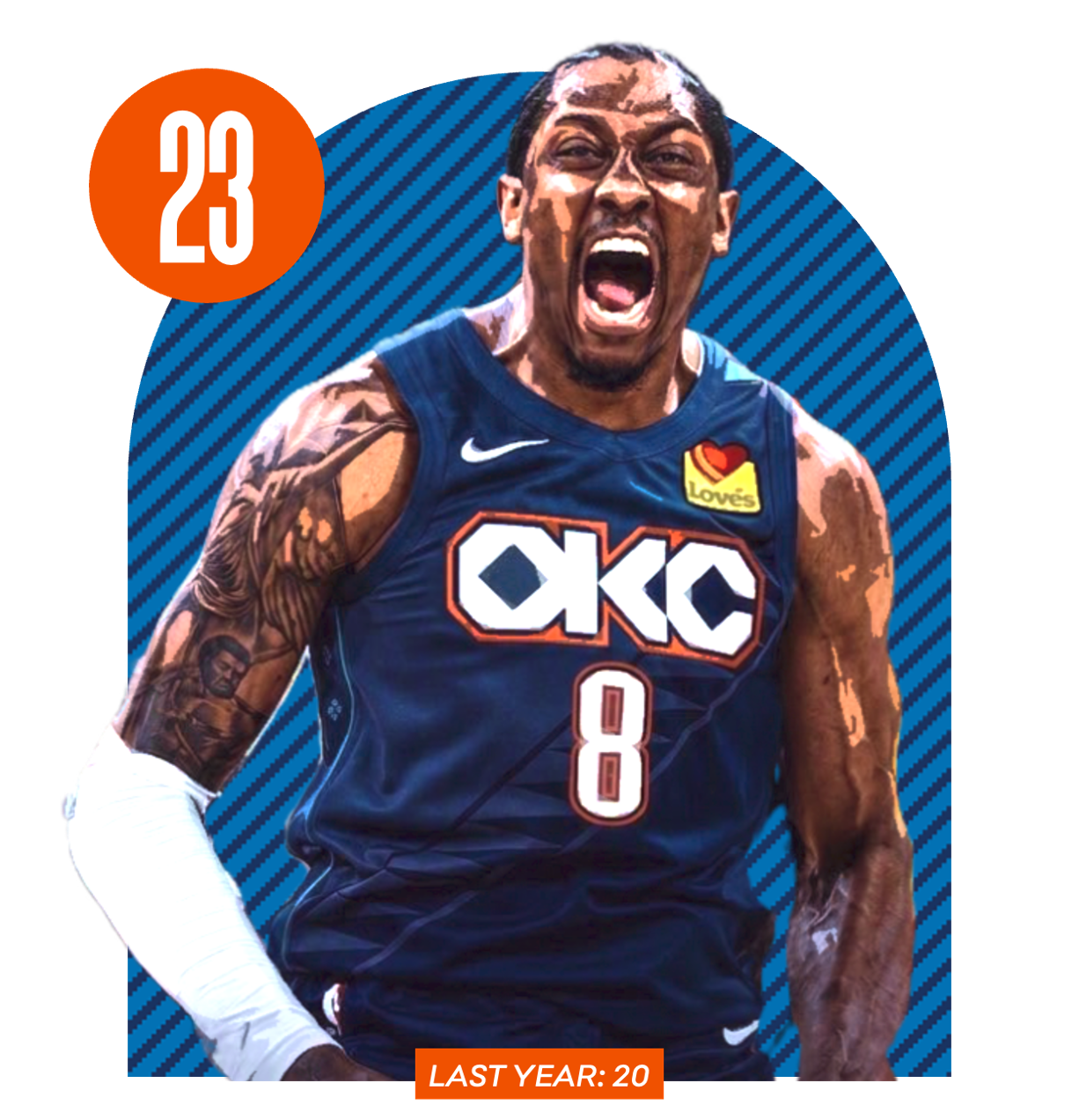
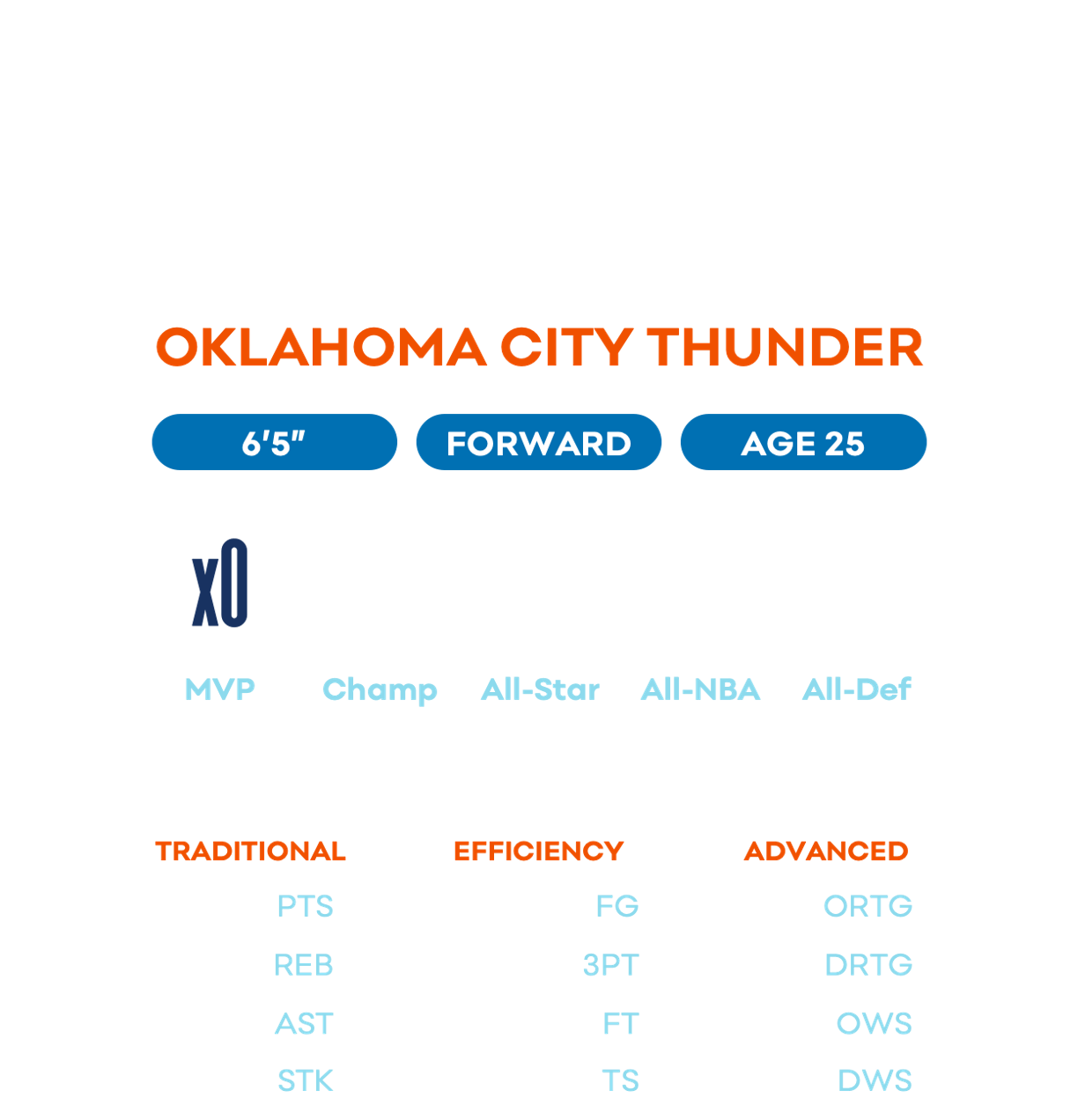
A big-bodied bulldozer, J-Dub thrives getting downhill to the basket and is a very strong finisher once he gets there. He pairs that with a reliable midrange game and an already effective yet still improving feel as a playmaker and creator. Defensively, he uses his giant frame and ridiculous 7’2” wingspan to be highly impactful as well. A year ago, he proved he could properly fulfill the role of reliable number-two option on an NBA champion, and has established himself as a two-way star—already with honors under his belt that include All-Star, All-NBA player, All-Defensive player, and NBA champion. His absence in this past season’s playoffs was greatly apparent for OKC, who fell short of their championship defense, largely due in part to the giant gap Williams left in the number-two spot of the Thunder pecking order.
WHY HE’S NOT HIGHER
But after stepping up on the biggest stage in 2025, J-Dub’s momentum was unfortunately interrupted by injuries, raising some questions about his immediate trajectory. And while his two-way versatility is undeniable, there are still some limitations to his offensive game that separate him from the league’s true elite. His 3-point shot plummeted to 29.9% this past year, he still can struggle creating separation against longer defenders, and remains much more comfortable attacking an advantage than consistently generating one from scratch. Playing alongside Shai certainly helps alleviate those concerns, but it also makes it difficult to know just how much offensive responsibility J-Dub could handle if asked to carry a larger load.
-
WHY HE’S NOT LOWER
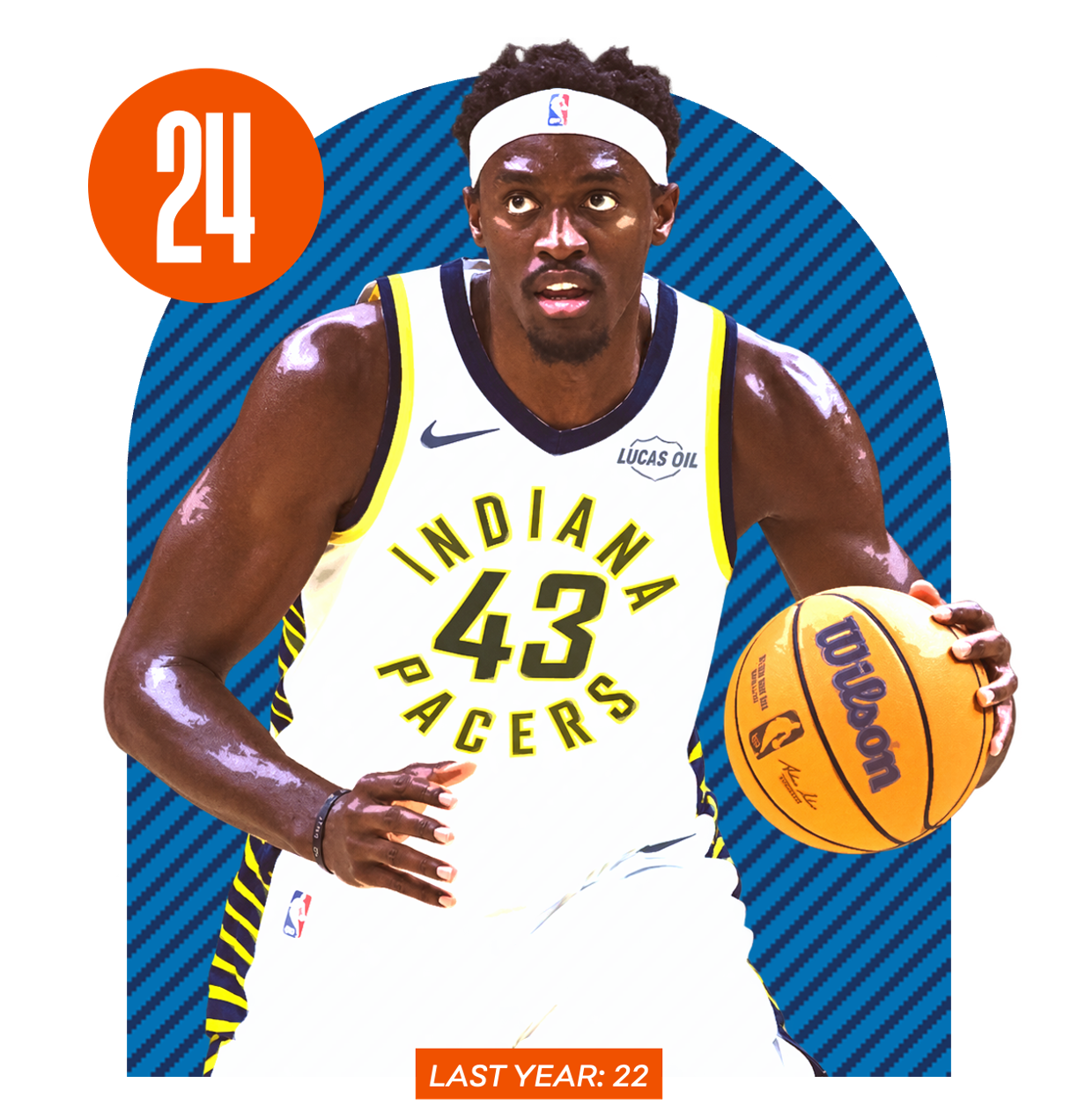
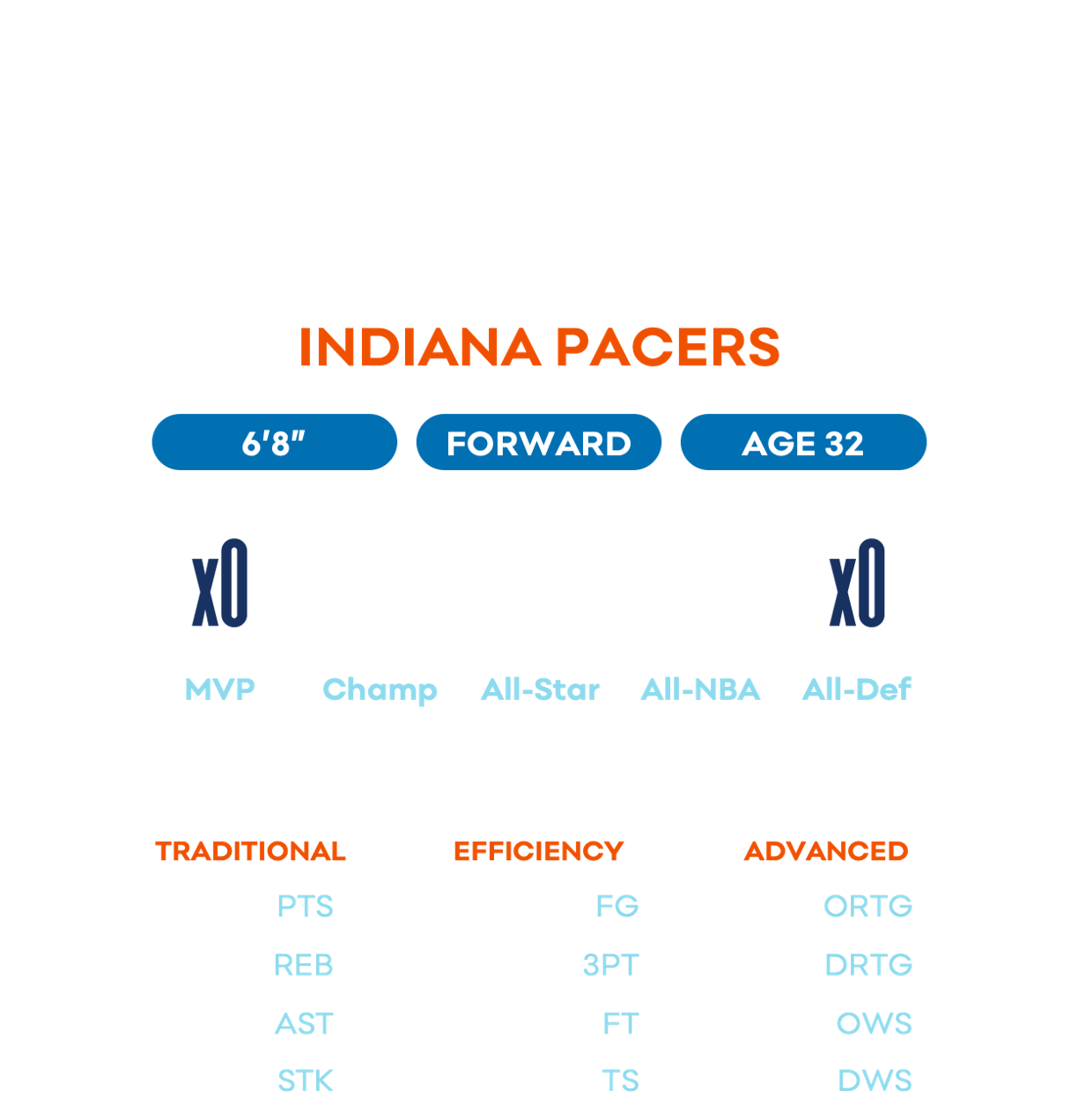
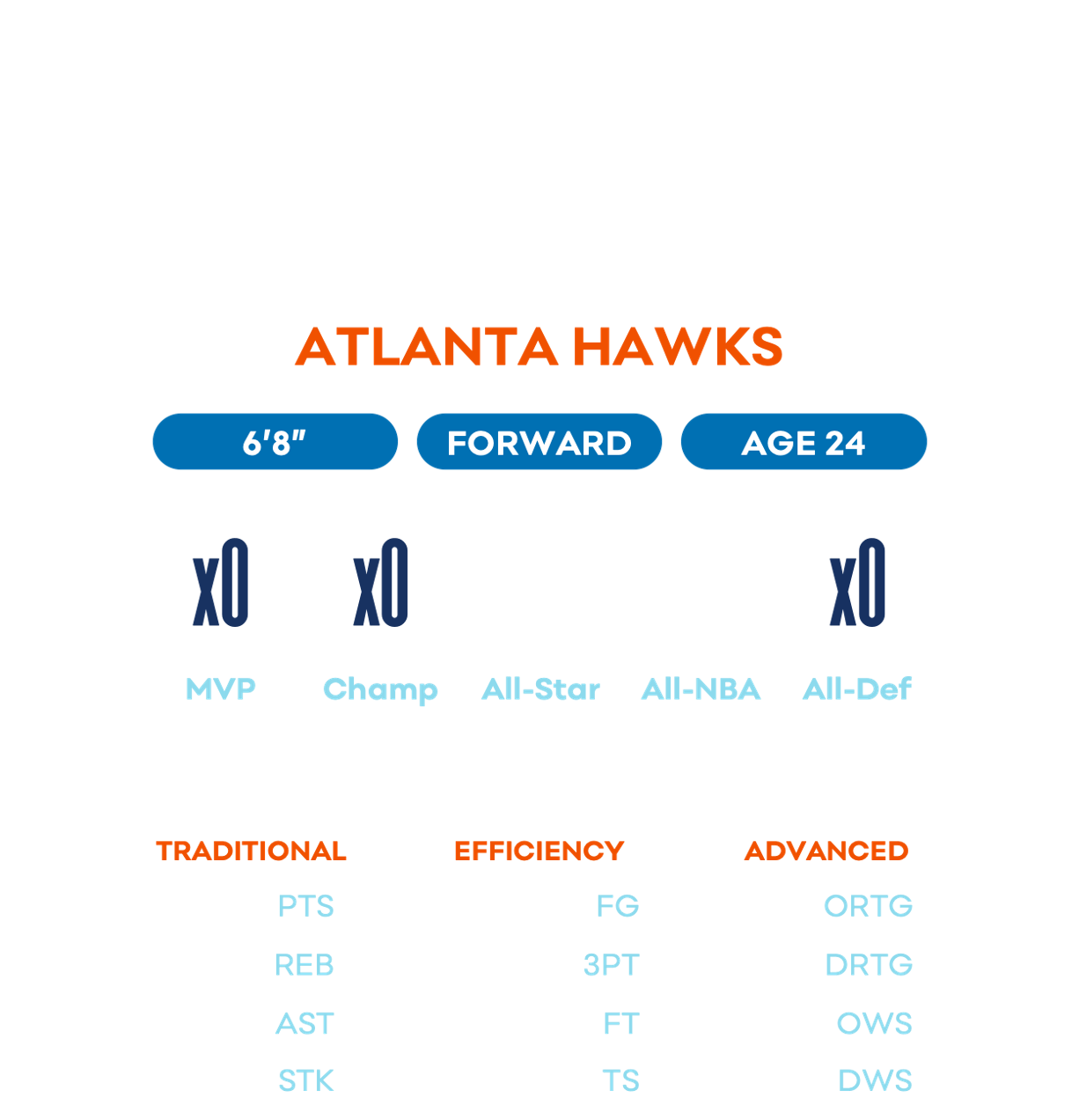
A versatile, skilled, and high-IQ modern-day forward—Siakam isn’t flashy, but he does a little bit of everything. He can score, pass, rebound, defend, and has steadily improved his primary weakness as a long-range shooter—hitting 37.6% of his threes since arriving in Indiana. Siakam has the size, length, and versatility to be a nightly mismatch—put a bigger player on him, and he’ll breeze right past him to the basket, or put a slightly smaller wing on him, and he can overpower him with force. He has a solid isolation game, a silky midrange stroke, and of course, mastery of his patented spin move getting downhill to the basket. He’s never going to be your ideal number-one, go-to guy offensively, but Siakam knows where he stands in the pecking order and will continue to be solid as a rock.
WHY HE’S NOT HIGHER
Being a jack of all trades, Siakam is also a master of none. He lacks one true elite skill to fall back on—which does set a clear ceiling on him as a player. And while he’s proven to be a fantastic complementary star, the Pacers’ struggles without Haliburton highlighted the limitations of Siakam as a primary offensive engine, which was also apparent during his last few seasons in Toronto. While the 3-point shot has improved, he’ll likely never be an elite perimeter shooter, he can be a little one-dimensional in the half-court, and at 32 years old, it’s fair to wonder when a subtle decline might occur.
-
WHY HE’S NOT LOWER
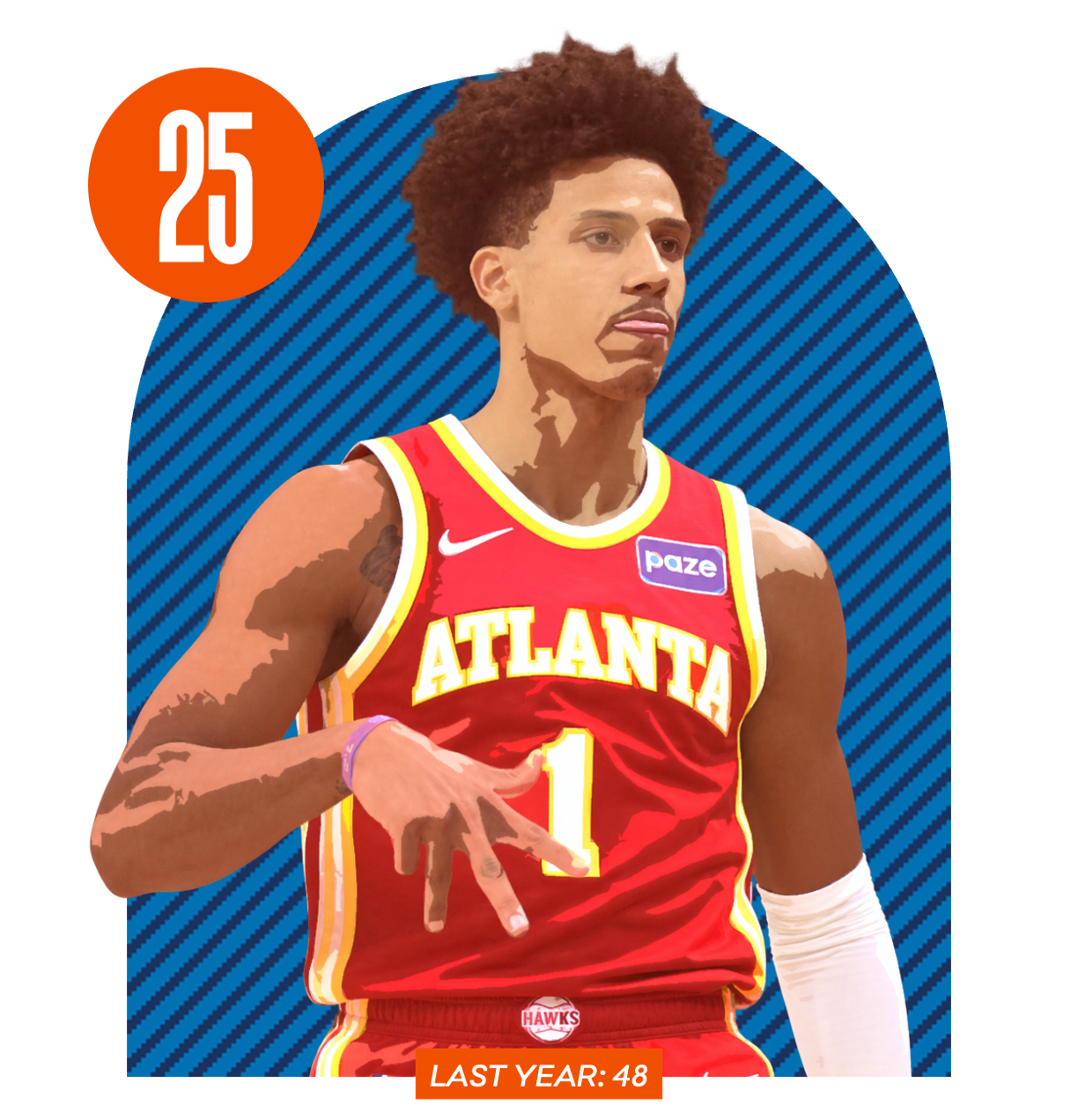
After years of steady improvement, Johnson broke out in a massive way this past season and—in the process—went from an up-and-coming young star to one of the best forwards in the league. Johnson is a monster athlete with size who has the ball skills and feel for the game to be one of the premier versatile, do-it-all forwards that every team is desperate to get their hands on. Johnson does his best work in transition as a threat to take it coast-to-coast, but what makes him special is his unique passing and playmaking for a player of his size—becoming just the fifth non-guard in NBA history to average at least 7.9 assists in a season. He’s a nightly triple-double threat, a dominant rebounder, and has established himself as a legitimate offensive centerpiece rather than just a complementary young talent.
WHY HE’S NOT HIGHER
While Johnson’s ascension has been incredibly impressive, there are still some legitimate questions about his ceiling as a number-one option. His jump shot remains a work in progress, and despite showing flashes of improvement, he’s still not a particularly threatening perimeter scorer—allowing defenses to sag off him and make life more difficult in the half-court. His self-creation game also isn’t quite polished enough to consistently manufacture efficient offense against set defenses. And perhaps most importantly, the durability concerns haven’t completely disappeared, as injuries have interrupted multiple seasons of his young career.
-
Analysis still to come!
-
Analysis still to come!
-
Analysis still to come!
-
Analysis still to come!
-
Analysis still to come!
-
Analysis still to come!
-
Analysis still to come!
-
Analysis still to come!
-
Analysis still to come!
-
Analysis still to come!
-
Analysis still to come!
-
Analysis still to come!
-
Analysis still to come!
-
Analysis still to come!
-
Analysis still to come!
-
Analysis still to come!
-
Analysis still to come!
-
Analysis still to come!
-
Analysis still to come!

-
Analysis still to come!
-
Analysis still to come!
-
Analysis still to come!
-
Analysis still to come!
-
Analysis still to come!
-
Analysis still to come!
-
Analysis still to come!
-
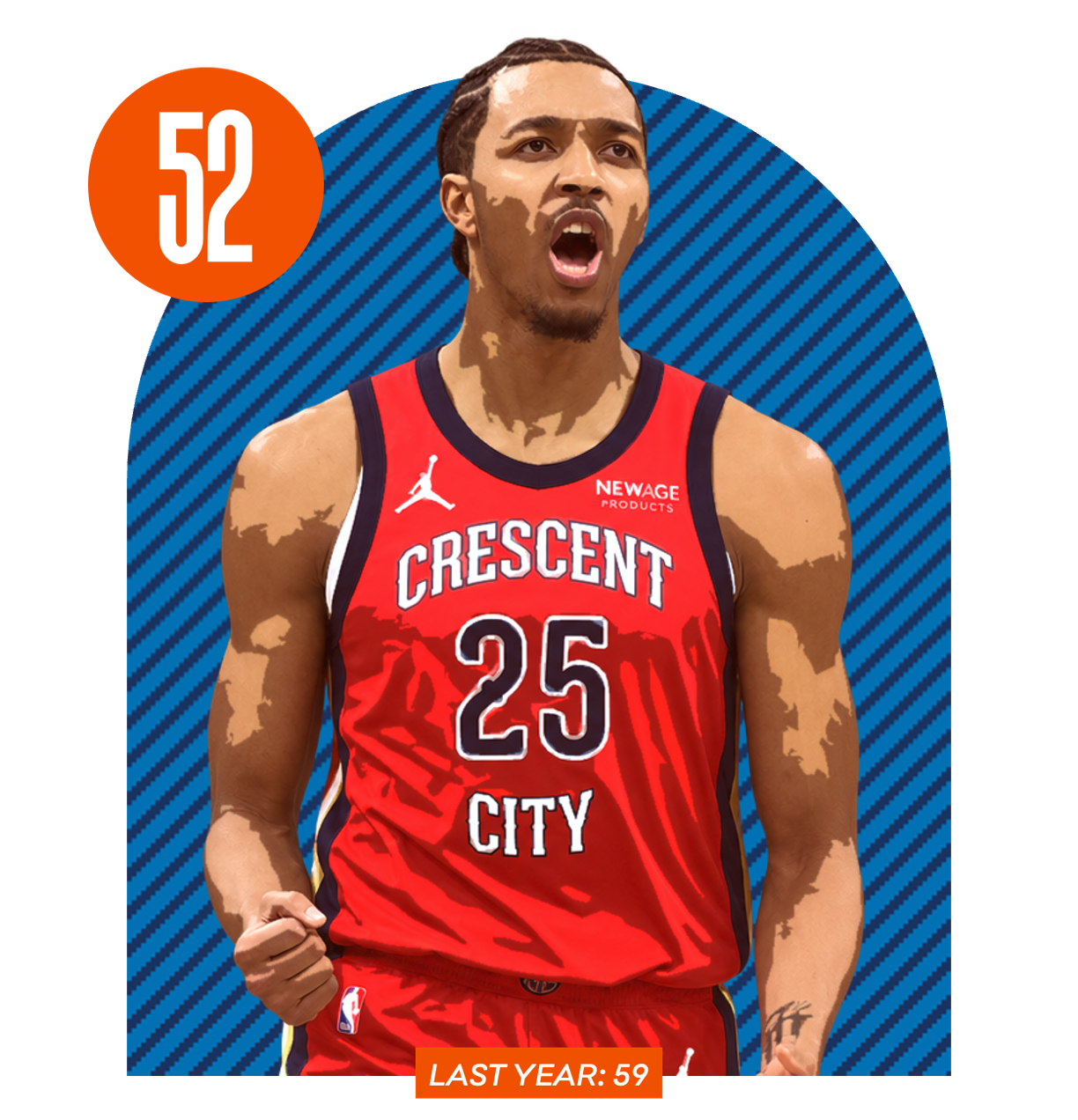
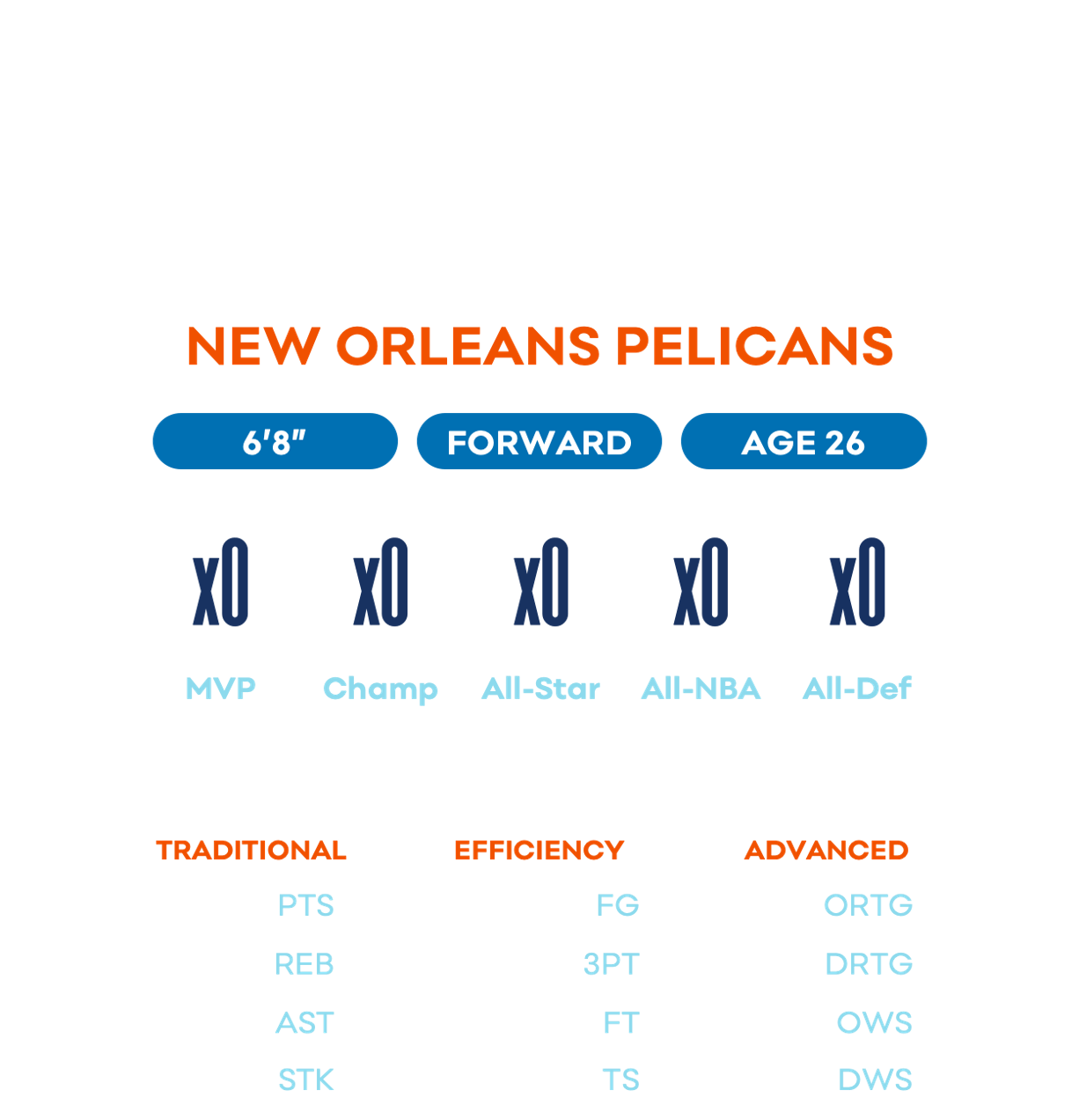
Analysis still to come!
-
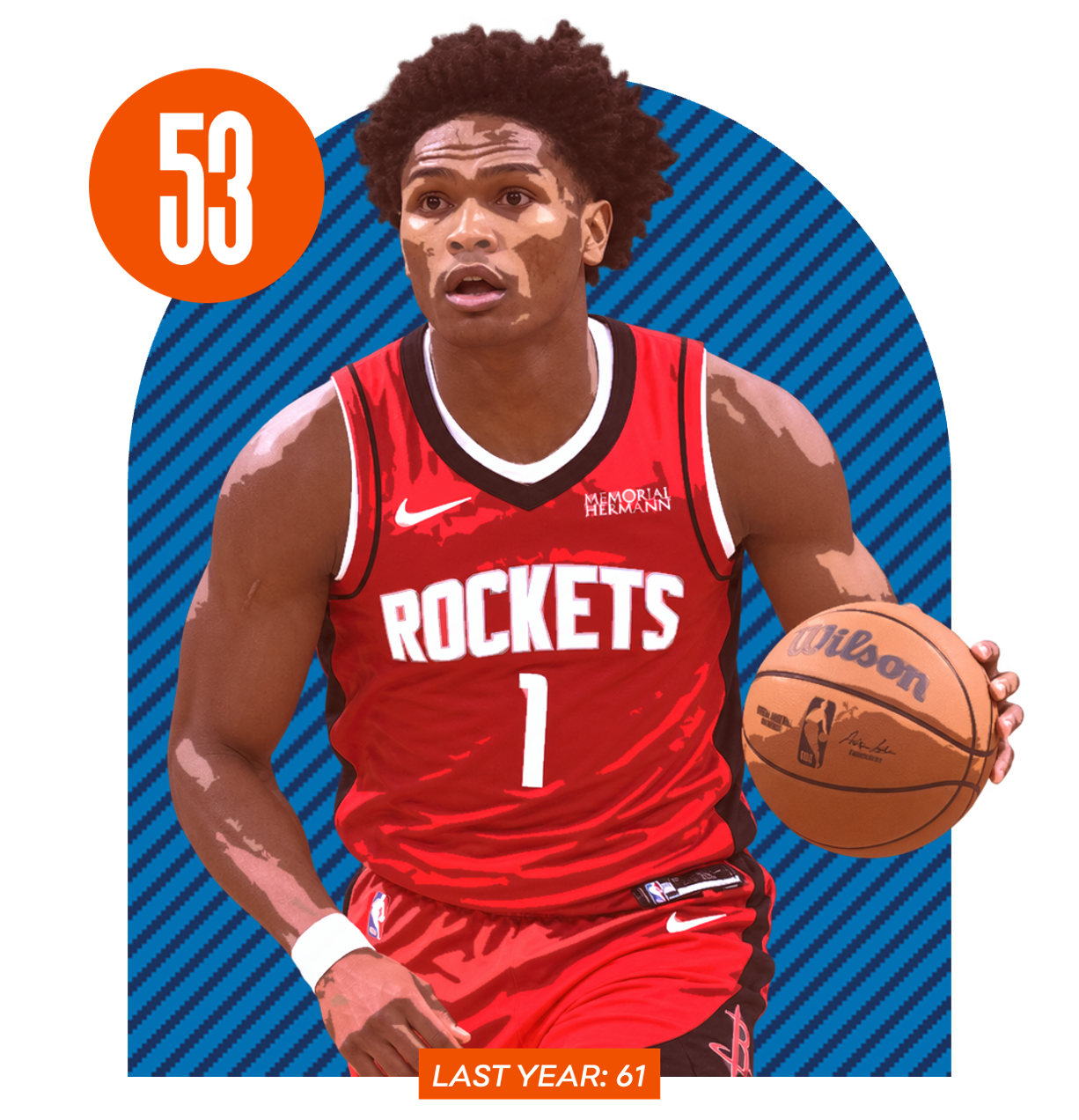
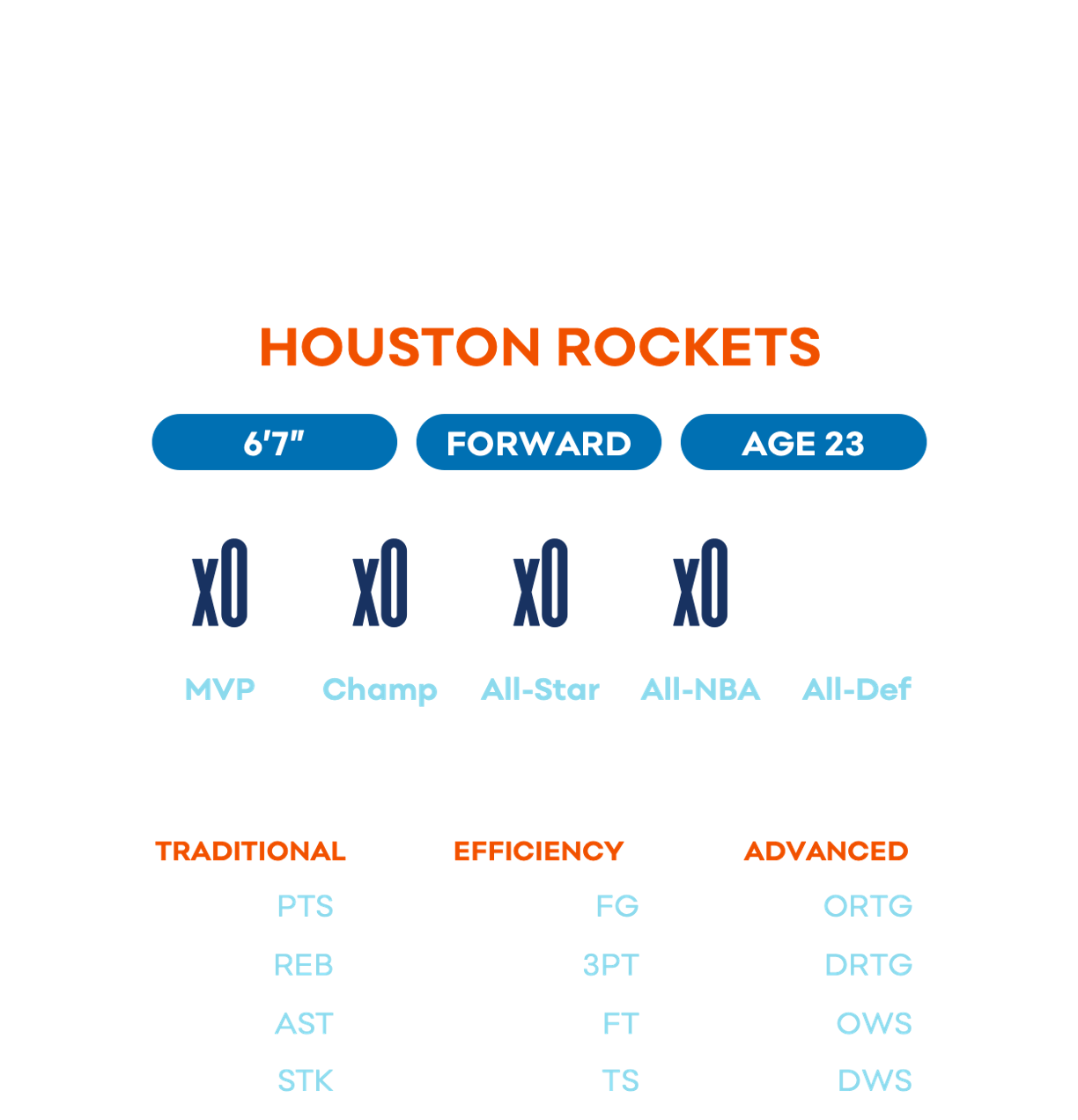
Analysis still to come!
-
Analysis still to come!
-
Analysis still to come!
-
Analysis still to come!
-
Analysis still to come!
-
Analysis still to come!
-
Analysis still to come!
-
Analysis still to come!
-
Analysis still to come!
-
Analysis still to come!
-
Analysis still to come!
-
Analysis still to come!
-
Analysis still to come!
-
Analysis still to come!
-
Analysis still to come!
-
Analysis still to come!
-
Analysis still to come!
-
Analysis still to come!
-
Analysis still to come!

-
Analysis still to come!
-
Analysis still to come!
-
Analysis still to come!
-
Analysis still to come!
-
Analysis still to come!
-
Analysis still to come!
-
Analysis still to come!
-
Analysis still to come!
-
Analysis still to come!
-
Analysis still to come!
-
Analysis still to come!
-
Analysis still to come!
-
Analysis still to come!
-
Analysis still to come!
-
Analysis still to come!
-
Analysis still to come!
-
Analysis still to come!
-
Analysis still to come!
-
Analysis still to come!
-
Analysis still to come!
-
Analysis still to come!
-
Analysis still to come!
-
Analysis still to come!
-
Analysis still to come!
-
Analysis still to come!
-
Analysis still to come!
-
Analysis still to come!
-
Analysis still to come!
-
Analysis still to come!